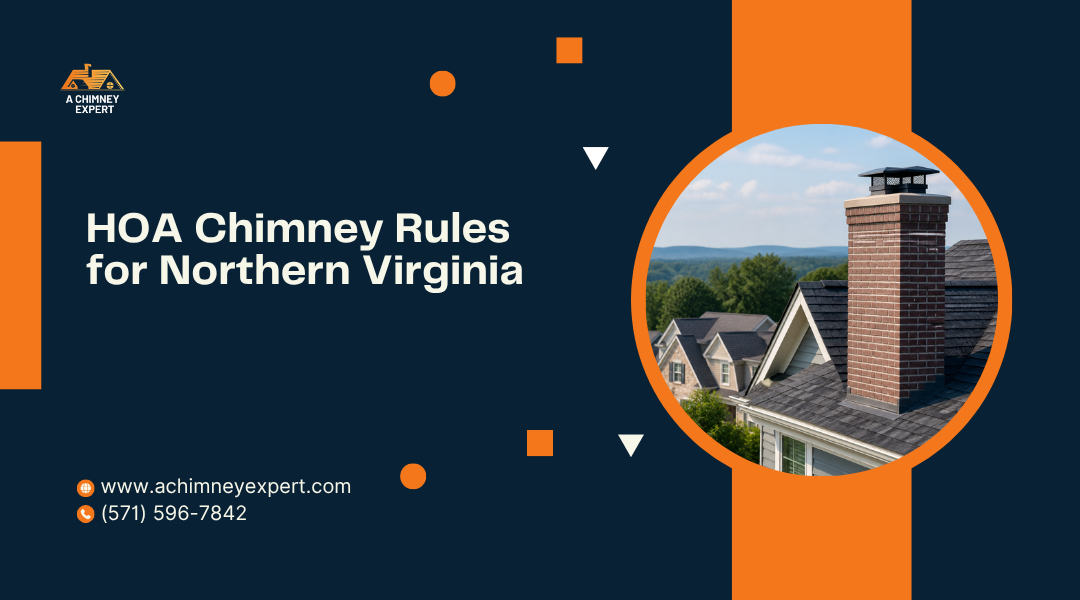
Your HOA likely plays a role in what you can and can’t do with your chimney, but that authority has limits. Your HOA can regulate the appearance and placement of exterior features like chimneys, yet it cannot stop you from making necessary repairs or safety upgrades required by code. In Northern Virginia, these boundaries exist under state law and your community’s own governing documents, which must balance safety, aesthetics, and homeowners’ rights.
You may find that HOA approval is needed for visible changes, such as altering brickwork or adding a new cap design. But when your chimney poses a safety risk or fails inspection, state and local building codes override HOA preferences. Understanding how these rules fit together helps you move forward confidently—especially when compliance affects both home safety and neighborhood harmony.
Expert insight from specialists like A Chimney Expert in Sterling, VA, shows how professionals navigate HOA restrictions while keeping systems safe and up to code. Knowing your rights, your HOA’s authority, and how to communicate effectively can make the difference between a smooth project and a frustrating delay.
When HOA Authority Governs Chimney Work
Your homeowners association can regulate chimney repairs or changes when the work affects the property’s exterior or common areas. The level of control depends on the declaration, covenants, and rules and regulations that form your HOA’s legal authority under Virginia law.
Covenants, Conditions, and Restrictions Scope
Your HOA’s Covenants, Conditions, and Restrictions (CC&Rs) define what the association can regulate. In most Northern Virginia communities, these legal documents cover visible changes to the exterior of homes to maintain a consistent appearance. If a chimney alteration affects the structure’s look, the association often has the right to review and approve it.
The declaration recorded with the county sets the scope of this control. It usually grants the HOA power over exterior design, including masonry, flue caps, or paint color. Many rules and regulations expand on these covenants and describe the review process through an architectural committee.
You should check whether your governing documents reference chimneys specifically. If they do, you may need written approval before making any repair or replacement that changes materials, height, or color.
Exterior Control vs Interior System Responsibility
An HOA’s authority usually ends at the exterior wall. You remain responsible for the interior parts of your chimney, such as liners, dampers, or soot removal. The association’s rules apply only when your project changes what others can see or affects safety systems tied to common walls or roofs.
Some planned developments include shared structures, like townhouse chimneys extending through a common roof. In these cases, the declaration or rules may list the chimney as a “shared element,” giving the HOA responsibility for maintenance or repair coordination. You may need to follow association guidelines to ensure structural integrity and uniform appearance.
If you live in a detached home, your HOA typically cannot dictate how you repair the interior vent or firebox as long as the exterior remains unchanged.
Situations Where HOA Approval Is Not Required
Not every chimney project needs HOA review. Routine maintenance—like cleaning, relining, or fixing interior cracks—usually falls outside the association’s scope. Temporary safety repairs that do not alter visible features often do not require notice or application.
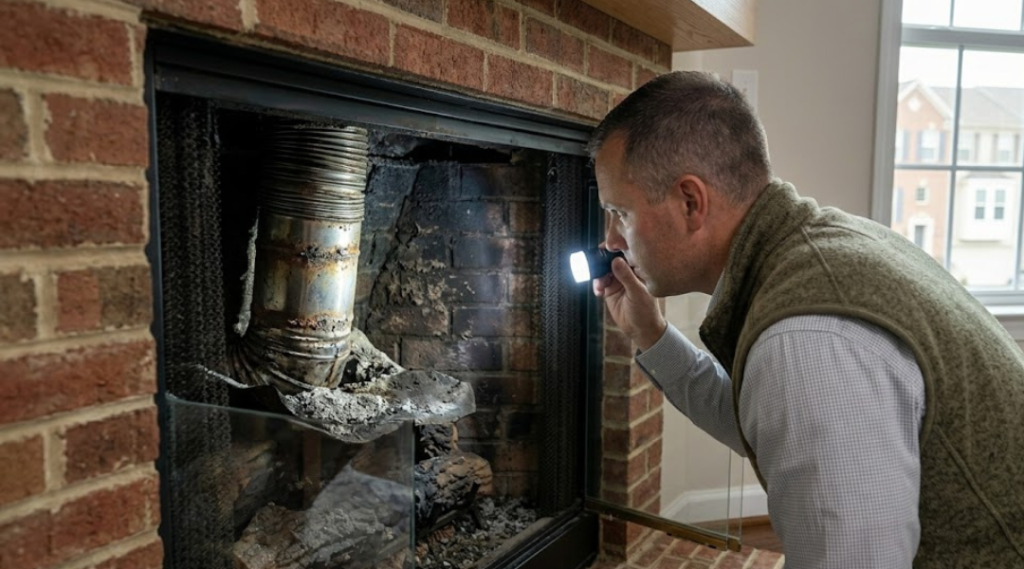
Some governing documents also exempt repairs that restore the original appearance. If you replace damaged bricks or flashing to match existing materials, the HOA normally considers this ordinary maintenance.
It’s helpful to verify whether emergency repairs need post-notification under your rules and regulations. Keeping records of what was fixed and why prevents disputes. When work remains inside your property boundaries and does not affect design uniformity or shared systems, Virginia HOAs generally have no authority to restrict it.
Legal Boundaries Between HOA and State Codes
Virginia law defines clear limits on what a homeowners association (HOA) can control versus what state and local authorities regulate. Your HOA can set property rules through recorded covenants, but those rules must comply with public safety codes, homeowner rights, and the Virginia Property Owners’ Association Act. When conflicts arise, state statutes and safety laws take priority.
Virginia Property Law and Association Authority
Under the Virginia Property Owners’ Association Act (POAA), your HOA has legal authority to manage Covenants, Conditions, and Restrictions (CC&Rs), collect dues, and adopt community rules. These rules may cover structures such as chimneys, but they cannot override your basic property rights or statutory protections.
Many HOAs in Northern Virginia operate as nonprofit corporations. That legal status allows them to enforce architectural standards, but also binds them to state-level requirements for notice, hearings, and rule enforcement. You have the right to request written clarification, attend HOA meetings, and challenge actions that appear inconsistent or arbitrary.
If you believe the board is applying restrictions unfairly, such as approving one homeowner’s masonry change but denying another, state law recognizes this as selective enforcement. Virginia courts and the POAA require boards to apply standards consistently and in good faith.
| Area | Controlled by HOA | Controlled by State |
|---|---|---|
| Aesthetic design | Yes | No |
| Building safety | No | Yes |
| Inspection standards | No | Yes |
| Rule enforcement | Yes, within law | Yes, if violative of statutes |
Fire Safety Codes Overriding HOA Limitations
Your local and state fire safety codes can override HOA rules that interfere with required repairs or upgrades. Chimney modifications often involve fire-rated materials, venting, or clearances governed by Virginia Uniform Statewide Building Code (USBC) standards. These codes take legal precedence over HOA guidelines.
For example, if a damaged chimney poses a risk of fire or carbon monoxide leakage, the law obligates you to correct the hazard even if the association’s rule delays or restricts such repairs. An HOA cannot deny permission for safety corrections required by city permits or state inspection authorities.
You should keep copies of code inspection reports and written HOA correspondence. Documentation protects your position if a hoa dispute escalates to mediation or a legal complaint under the POAA.
Conflicts Between Enforcement and Safety Compliance
Conflicts often arise when HOA enforcement focuses on aesthetics while safety codes demand immediate compliance. A board might delay approval for chimney restructuring because of exterior appearance criteria. However, state and local laws require that life‑safety hazards be addressed without unnecessary interference.
If your association fines you for performing an urgent, code‑compliant repair, you can request a formal hearing. Under Virginia law, the HOA must provide written notice and an opportunity to respond before imposing penalties. You may also appeal enforcement actions that conflict with safety compliance through circuit court or local arbitration programs.
When reviewing such situations, consider whether the restriction serves a legitimate community purpose or hinders your homeowner rights to maintain a safe property. In any hoa dispute, safety obligations under state law always outweigh purely aesthetic HOA preferences.
Interpreting HOA Guidelines Across Property Types
Responsibilities for chimney repairs and modifications depend on whether the home is attached or detached, how the HOA defines structural boundaries, and which elements belong to the common area or to your individual lot. Understanding these details helps you know who pays for fixes, who approves changes, and how liability is handled if problems arise.
Townhomes vs Detached Homes Responsibility Differences
In most townhome communities, the HOA maintains shared exterior elements, including roofs, siding, and at times, chimneys that serve more than one unit. Because these structures often connect multiple homes, the board of directors may classify them as part of the common area. This means the HOA oversees repairs, coordinates vendors, and uses community funds to pay expenses.
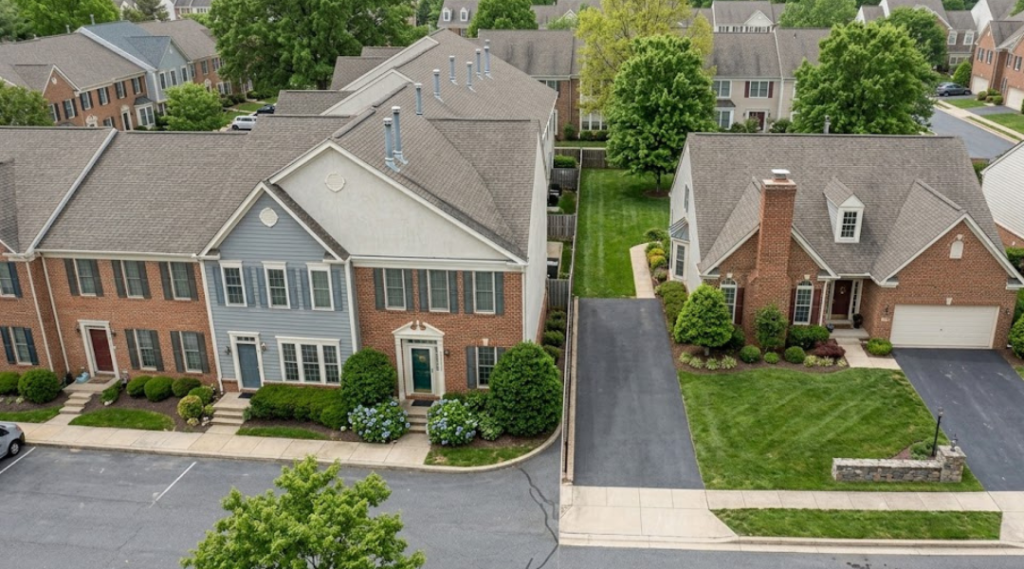
Detached homes usually fall under a lot-based responsibility model. You own both the house and any attached structures, such as your chimney. The HOA typically handles only community-wide assets like fencing near shared boundaries or landscaping in public spaces. Repairs that affect safety or appearance, especially if visible from the street, might still need board approval but come out of your pocket.
When reviewing your governing documents—especially the Covenants, Conditions, and Restrictions (CC&Rs)—check for sections defining “exterior elements,” “units,” or “limited common areas.” The language in these clauses determines whether a chimney falls under private or shared maintenance.
Shared Structures and Liability Considerations
If your chimney connects to another unit or sits near a shared roofline, the issue becomes one of liability. The HOA must decide whether the cost and risk belong to the association, the individual owner, or both. For example, a flue that vents multiple homes might be part of the common area because damage could affect several residents.
HOAs often define maintenance duties through policies that indicate which party repairs, inspects, and insures shared elements. A simple table can help you interpret these roles:
| Structure Type | Typically Owned By | Maintenance Paid By |
|---|---|---|
| Shared Chimney Stack | HOA (Common Area) | Association Dues |
| Individual Chimney | Homeowner (Lot) | Homeowner |
| Roof or Flashing Around Chimney | HOA or Split | Depends on CC&Rs |
If damage results from negligence, the responsible party—either the homeowner or the HOA—may bear additional costs. Understanding these terms prevents disputes later.
Architectural Review Boards and Modification Approvals
When you plan to modify a chimney, such as changing materials or installing new flue caps, you usually must seek approval from your architectural review board (ARB) or board of directors. These bodies review your request to ensure any change aligns with aesthetic guidelines and safety codes.
Most boards require you to submit a written application, including sketches, contractor details, and material samples. They evaluate how your project affects the property’s visual consistency and whether it alters shared structures. Missing approvals can lead to fines or orders to reverse the modification.
Even minor updates to a chimney’s exterior—like repainting or adding a spark arrestor—might need ARB review if visible from common areas. Following the proper steps keeps your project compliant with HOA rules and helps you avoid costly corrections.
How a Chimney Expert Navigates HOA Constraints
A chimney expert helps you meet both building safety codes and HOA regulations. Their role includes reviewing association rules, explaining inspection results in clear terms, and communicating with HOA boards to move repairs forward efficiently.
Aligning Repair Requirements With Association Rules
Before touching the chimney, an expert reviews your HOA’s governing documents. These may outline who maintains the chimney, limits on external appearance, or the need for board approval. In many Northern Virginia communities, exterior structures like chimneys fall under HOA oversight because they affect the building’s shared look.
Your contractor compares these rules with local building codes. For example, if the HOA restricts visible changes to brick color, the expert can propose matching materials that meet both standards. This step avoids rework or disputes later.
A reliable expert also prepares clear documentation including estimates, material descriptions, and repair diagrams. HOA boards often require these for formal approval. Providing complete details upfront helps you avoid delays and reduces back-and-forth between you, the contractor, and the management company.
Inspection Findings Influencing Approval Discussions
A chimney inspection report helps the HOA determine whether work is maintenance or modification. For example, if cracking mortar threatens structural safety, most HOAs must allow prompt repairs even if they affect exterior appearance.
Your expert’s findings should include photographs, measurements, and safety notes. These allow the board to see the scope without needing a second opinion. When possible, the inspector references relevant building codes or fire safety standards. This helps justify repair urgency when approval timelines are slow.
You can use this report as evidence when requesting permission or reimbursement. Some associations pay for exterior repair costs when the chimney’s outer structure is considered a common element. Detailed inspection data gives you clarity about whether costs belong to you or the HOA.
Coordination Between Homeowners, Boards, and Inspectors
Smooth communication often determines how quickly a repair gets approved. Your chimney expert can attend board meetings or provide written summaries that explain technical details in plain language. This step helps HOA members understand the difference between a cosmetic update and a needed safety correction.
The process typically involves:
| Step | Responsible Party | Purpose |
|---|---|---|
| Report damage | Homeowner | Notify HOA and request inspection |
| Provide inspection results | Expert | Document safety or repair needs |
| Review and approve | HOA Board | Ensure compliance with rules |
| Schedule repair | Homeowner & Expert | Finalize timeline and confirm materials |
Even minor miscommunication can delay approval, so keeping messages documented by email or written reports helps. When all sides understand their roles, chimney work proceeds efficiently within HOA limits.
Tradeoffs Between HOA Compliance and Safety Outcomes
Meeting HOA rules while maintaining chimney safety often involves balancing timeliness, materials, and long-term function. Your decision about when and how to complete chimney work affects both compliance and the safety of your home.
Delayed Repairs Due to Approval Processes
In Northern Virginia, HOAs often require homeowners to submit repair or modification requests before starting work. This process can take days or even weeks while the board reviews drawings, materials, or color samples. During this time, a damaged or leaking chimney may worsen.
A delay in addressing water intrusion or loose masonry can lead to structural weakening or interior moisture damage. You may also face higher repair costs if deterioration spreads to adjacent roofing or framing sections.
To manage this, consider:
- Documenting urgent safety issues with reports or photos from a licensed inspector
- Requesting emergency approval under provisions that allow immediate safety repairs
- Following up regularly with the association to prevent avoidable hold-ups
Waiting for approval protects conformity, but it can also reduce safety if critical damage escalates before work begins.
Material or Design Compromises Affecting Performance
HOA design rules often limit what materials or finishes you can use, especially for visible structures like chimneys. Some associations only permit certain brick colors, mortar types, or metal flue caps that match community appearance standards. While these rules help preserve neighborhood uniformity, they may restrict longer-lasting or safer options.
For example, synthetic chimney crowns or stainless steel liners can improve resistance to weather and heat. If your HOA bans them for aesthetic reasons, you might need to use less durable alternatives.
This tradeoff can result in:
| Concern | Possible Outcome |
|---|---|
| Limited material choices | Reduced chimney lifespan |
| Aesthetic restrictions | Higher long-term maintenance |
| Outdated specs | Lower fire resistance |
You can reduce these risks by submitting technical data showing that newer materials align with safety codes and, where possible, match approved appearances.
Long-Term Risks from Restricted Modifications
Once an HOA denies or limits certain upgrades, you may face recurring issues with chimney performance. Rules preventing structural enhancements — such as cap replacements, spark arrestors, or new flue liners — can increase exposure to moisture, smoke backdrafts, or fire hazards over time.
If your community’s covenants favor appearance over modernization, you may have fewer options for energy-efficient or safety-improving designs. That can also make the home harder to insure or maintain.
Regular maintenance helps reduce risk, but long-term safety still depends on allowing necessary upgrades. When restrictions block reasonable repairs, Virginia homeowners can often petition the HOA for variance approvals, using code compliance reports or fire safety standards as supporting evidence.