
Gas fireplaces give you the warmth and comfort of a real flame without the mess of wood or ashes. But this clean-burning convenience can create a false sense of security. Many homeowners assume that no smoke means no maintenance, which is a mistake that can put your family at risk.
Yes, gas fireplace chimneys need regular inspection and occasional cleaning, even though they don’t produce the dangerous creosote buildup that wood-burning systems do. While you won’t need the heavy scrubbing required for wood chimneys, your gas fireplace venting system still faces real threats like soot from incomplete combustion, blockages from debris or animals, and corrosive damage from water vapor condensation.
Understanding what makes gas fireplaces different from wood-burning ones will help you protect your home from carbon monoxide dangers and keep your system running safely. The key is knowing when inspection matters more than cleaning, and what warning signs mean your venting system needs professional attention.
Where Gas Fireplaces Sit on the Chimney Spectrum
Gas fireplaces don’t all relate to chimneys in the same way. Some types bypass traditional chimneys entirely, while others depend on them for safe operation.
Vent-Free, Direct-Vent, And Natural Draft Configurations
Vent-free gas fireplaces don’t use any chimney or external vent. They burn fuel so efficiently that combustion byproducts release directly into your living space. An oxygen depletion sensor shuts the unit off if air quality drops too low.
Direct vent gas fireplaces use a sealed combustion system with a two-pipe setup. One pipe pulls fresh air from outside for burning. The other pipe pushes exhaust gases out. This system vents through an exterior wall or roof using specialized piping, not a traditional chimney.
Natural draft gas fireplaces work more like wood-burning units. They pull room air for combustion and rely on natural convection to push exhaust up and out. These need vertical venting through a B-vent pipe or an existing chimney structure. The hot gases rise naturally, which means the vent must go straight up through your roof.
When A Gas Unit Still Relies On A Traditional Chimney
Your gas fireplace connects to a traditional chimney in two main scenarios. First, when you install a natural draft gas fireplace or gas log set in an existing masonry fireplace. The unit uses your existing chimney flue to vent combustion gases.
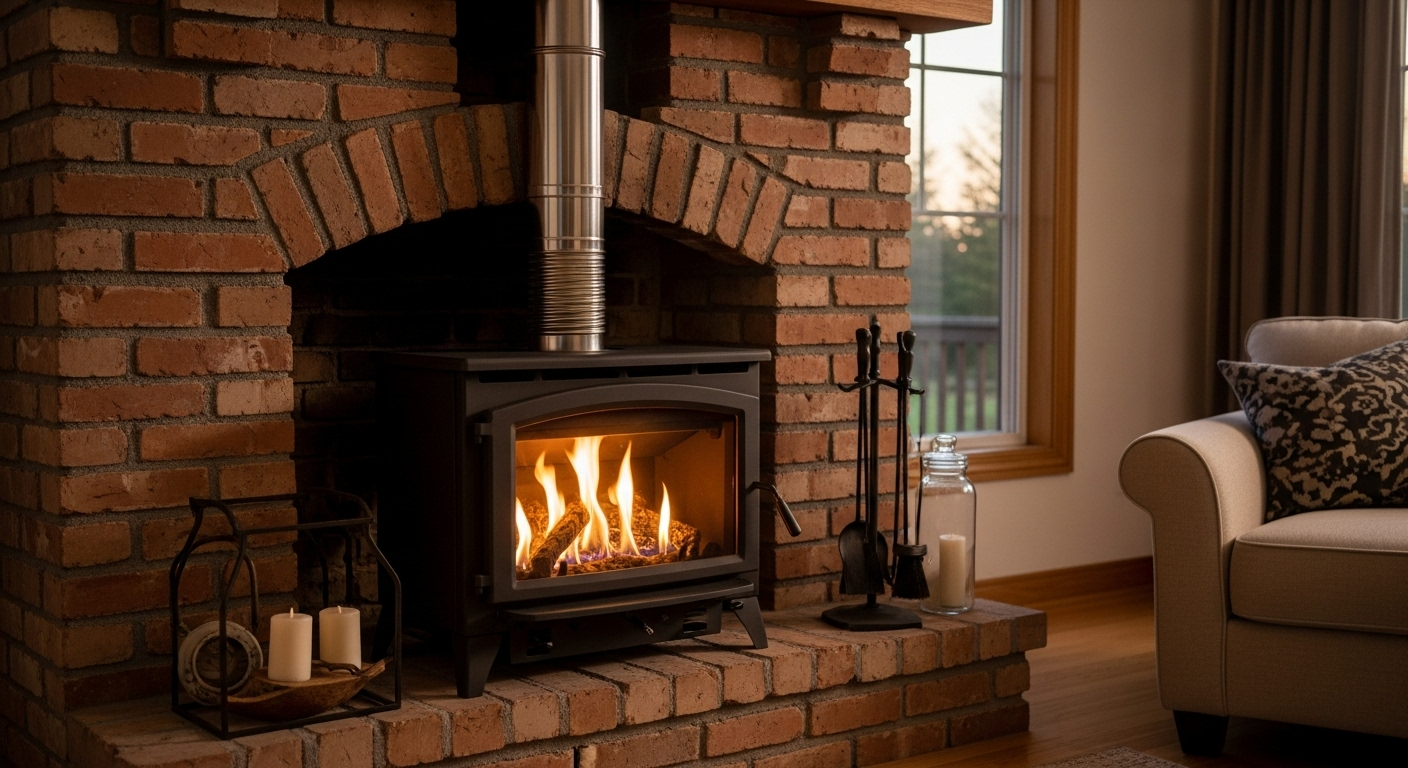
Second, when you retrofit a gas insert into a wood-burning fireplace. A flexible metal liner usually runs down the chimney to create a dedicated, properly-sized vent path for the gas unit. The liner ensures efficient venting and prevents exhaust from seeping into unused portions of the old flue.
Both setups mean your gas fireplace depends on the chimney structure for safe operation. The chimney becomes part of your venting system.
Situations Where Chimney Cleaning Is Structurally Irrelevant
If you have a direct vent gas fireplace that exits through an exterior wall, no chimney exists in the system. The vent pipe runs horizontally or at a slight angle to the outside. There’s nothing to sweep or clean in the traditional sense.
Vent-free gas fireplaces also have no connection to any chimney or vent system. They’re completely self-contained units that don’t expel gases outside your home at all.
In both cases, chimney cleaning doesn’t apply because these types of gas fireplaces operate independently of any chimney structure. Your maintenance focuses on the unit itself and its immediate venting components, not on a flue or chimney stack.
What Actually Accumulates In Gas Fireplace Venting Systems
Gas fireplaces produce different types of buildup than wood-burning systems, but accumulation still occurs. The residue includes combustion byproducts, moisture-related deposits, and external debris that can all restrict airflow and reduce safety over time.
Combustion Byproducts Without Visible Soot
Your gas burner creates carbon dioxide and water vapor during normal operation. Small amounts of carbon particles and sulfur compounds also form, though you won’t see the thick black soot common with wood fires. These fine particles stick to chimney walls and vent pipes as a light film that builds up gradually.
Natural gas burns cleaner than propane, but both fuels leave traces of residue. The combustion process also creates small amounts of nitrogen oxides that can combine with moisture to form corrosive compounds. You might notice a white or gray powdery substance on vent components during chimney sweeping inspections. This residue reduces your system’s efficiency by narrowing the vent opening and interfering with proper draft.
Moisture, Condensation, And Corrosive Residues
Gas combustion produces significant water vapor that travels through your venting system. When this vapor cools, it condenses on chimney walls and metal components. The resulting moisture combines with combustion gases to create acidic condensation that corrodes metal vent pipes and damages masonry.
You’ll often see rust stains, white deposits, or deteriorating mortar joints in gas fireplace chimneys. The acidic moisture eats away at metal liners and weakens brick structures over time. Cold weather makes condensation worse because of the temperature difference between exhaust gases and outdoor air. Proper chimney cleaning removes these deposits before they cause permanent damage to your venting system.
Debris Sources Unrelated To Fuel Type
Your chimney collects materials that have nothing to do with the gas burner itself. Birds build nests in unused chimneys during spring and summer months. Leaves, twigs, and other plant matter blow in through uncapped vents. Spider webs accumulate quickly in the warm, protected environment of a gas fireplace flue.
Dust and dirt from your home’s air also settle inside the chimney over time. Small animals sometimes enter through damaged chimney caps or missing screens. All of these materials block airflow and create fire hazards regardless of how clean your gas burns. Regular chimney sweeping removes physical obstructions that prevent proper venting of combustion gases.
Inspection Versus Cleaning As Distinct Maintenance Concepts
Inspection and cleaning are two separate activities that serve different purposes in gas fireplace maintenance. Inspection identifies potential problems, while cleaning removes accumulated debris that affects performance.
Conditions That Warrant Visual Or Mechanical Inspection Only
Your gas fireplace needs inspection when you want to verify safe operation without necessarily removing buildup. An annual chimney inspection checks structural integrity, gas connections, and safety controls. Your technician examines flame color, gas pressure, and venting systems for proper function.
Visual inspection catches problems like loose connections, corroded components, or damaged seals. The thermocouple position, pilot assembly, and burner ports get checked for proper alignment. Your venting system needs inspection to confirm it’s not damaged or deteriorating.
Some inspection tasks require special tools like gas pressure gauges or electronic testing equipment. A qualified technician verifies that safety shut-off valves work correctly. They also confirm your carbon monoxide detectors function properly and your chimney cap remains intact.
Thresholds Where Cleaning Becomes Functionally Necessary
Cleaning becomes necessary when dust, debris, or combustion deposits interfere with operation. If you notice soot on your glass doors or ceramic logs, cleaning is required immediately. Blocked burner ports reduce efficiency and create uneven flames that produce more deposits.
Your venting system needs cleaning when blockages restrict airflow. Bird nests, leaves, or ice buildup in exterior vents require removal for safe operation. Even minor obstructions can cause backdrafting or carbon monoxide issues inside your home.
Gas fireplace maintenance includes cleaning when you see visible dust accumulation around components. The burner area collects household dust that burns and creates odors. Your pilot assembly may need cleaning if the flame appears yellow instead of blue.
Risks Of Assuming Low-Maintenance Equals No-Maintenance
Neglecting your gas fireplace because it burns cleaner than wood creates serious safety risks. Carbon monoxide can build up from incomplete combustion caused by dirty burners or blocked vents. Your home remains at risk even without creosote formation.
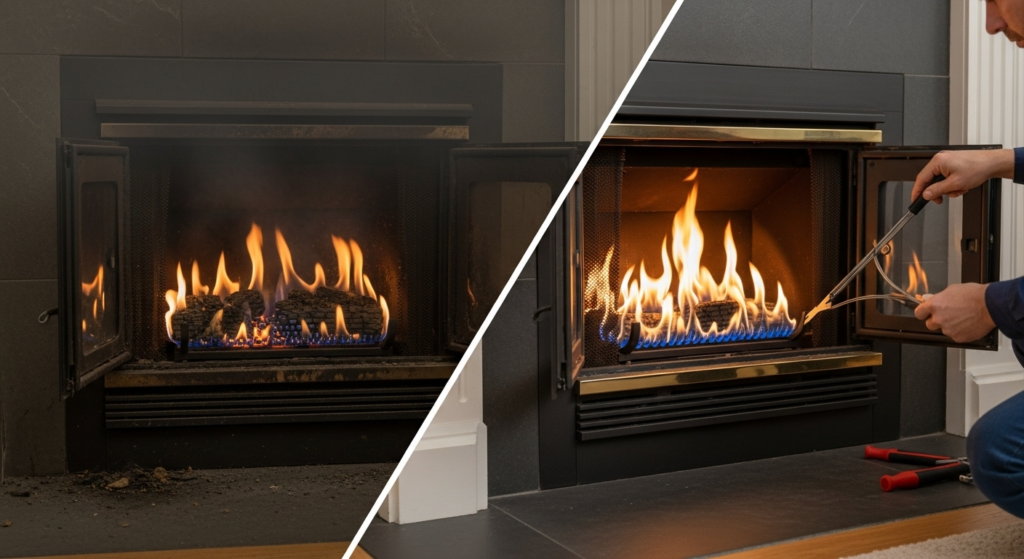
Skipping fireplace maintenance voids most manufacturer warranties. You might face expensive repairs that would have been prevented by routine service. Components wear faster when operating under stress from blockages or misalignment.
Assuming your gas system is self-sufficient ignores real hazards like gas leaks or faulty safety controls. Your family’s safety depends on regular professional attention to these systems. Small problems become major failures when ignored over multiple seasons.
Interpreting Manufacturer Guidance And Code Language
Manufacturer instructions and building codes contain specific language about maintenance requirements, but the wording often leaves room for interpretation. Understanding how these documents assign responsibility helps you determine when your gas fireplace needs professional attention.
How Appliance Specifications Frame Maintenance Responsibility
Every gas fireplace comes with an owner’s manual that outlines maintenance schedules. Most manufacturers require annual inspection of the venting system by a qualified technician. This language makes you responsible for arranging the service, even though you won’t perform the work yourself.
The manual typically specifies who qualifies to service your unit. Some brands require factory-certified technicians, while others accept any licensed gas fireplace service professional. You’ll find specific intervals for different maintenance tasks listed in the manual.
Common maintenance requirements include:
- Annual inspection of venting components
- Cleaning of burner assemblies and pilot lights
- Checking for blockages or damage in vent pipes
- Testing safety sensors and shut-off systems
Missing these scheduled services can void your warranty. The manufacturer’s language places this obligation directly on you as the homeowner.
Code Intent Versus Homeowner Interpretation
Building codes require that gas appliances operate safely, but they don’t always spell out exact cleaning frequencies. You might read that venting systems must remain “clear and unobstructed” without seeing how often to verify this condition.
The code’s primary intent is preventing carbon monoxide hazards and ensuring proper combustion. Your interpretation might be that a direct-vent system sealed from indoor air needs less attention than a B-vent system. However, both still accumulate dust, debris, and potential animal nests in exterior terminations.
Local jurisdictions sometimes add specific requirements beyond national codes. Your municipality might mandate annual inspections even when the manufacturer suggests longer intervals.
Professional Discretion In Ambiguous Cases
When manufacturer guidance conflicts with local codes or your situation falls into a gray area, a professional chimney sweep or gas fireplace service technician makes the final call. These experts assess your specific installation, usage patterns, and environmental factors.
A technician might recommend more frequent cleaning if you live in a dusty area or near the coast where salt air accelerates corrosion. They can identify issues like improper venting installation that requires immediate attention regardless of maintenance schedules.
Licensed professionals also know which components legally require their involvement. Some cleaning tasks fall within homeowner capabilities, but others need certified technicians for liability and code compliance reasons.
Consequences Of Neglecting Venting Systems On Gas Fireplaces
Failing to maintain your gas fireplace venting system creates problems that build up over time. These issues affect how well your fireplace works, damage the materials inside the vent, and create safety risks that develop slowly.
Draft Efficiency And Combustion Stability Effects
Poor draft performance happens when you skip chimney maintenance. Debris, soot, and condensation narrow the flue opening. This makes it harder for exhaust gases to move up and out of your home.
When the vent gets blocked, your fireplace can’t pull in enough air for proper combustion. The flames become weak or unstable. You might notice the fire goes out randomly or burns with a yellow or orange color instead of blue.
Reduced airflow also causes backdrafting. This means exhaust gases push back into your living space instead of going outside. Your fireplace will work less efficiently and use more gas to produce the same amount of heat.
The buildup gets worse each year you delay cleaning. Even small amounts of residue add up. A vent that’s only 20% blocked can cut your draft by nearly half. Your carbon monoxide detector may start going off more often because gases aren’t venting properly.
Long-Term Material Degradation Inside Vents Or Liners
Combustion creates water vapor and acidic compounds. These settle on the inside walls of your vent. The acids eat away at metal liners, mortar, and masonry over time.
Stainless steel holds up better than other materials, but it still corrodes without regular chimney maintenance. Aluminum and clay liners break down faster. You’ll see white deposits, rust, or crumbling mortar at the connections.
Cracks form as the liner weakens. Small cracks let exhaust gases seep into walls or other parts of your house. Moisture from condensation speeds up the damage. The vent system can fail completely if corrosion goes unchecked for several years.
Replacing a damaged liner costs much more than routine cleaning. The entire venting system might need replacement in severe cases. Materials exposed to acidic buildup for five years or more often suffer permanent damage that can’t be repaired.
Safety Implications That Emerge Gradually Rather Than Suddenly
Carbon monoxide builds up slowly when vents don’t work right. You won’t notice it at first because the gas has no smell or color. Early symptoms feel like the flu—headaches, dizziness, and tiredness.
Your carbon monoxide detectors provide the first warning. If they alert frequently, your venting system likely has problems. Never ignore these alarms or assume they’re false alerts.
Partial blockages let small amounts of carbon monoxide enter your home over weeks or months. This low-level exposure harms your health before you realize something is wrong. Children and pets show symptoms first because they breathe faster.
Structural damage from corrosion also creates hidden dangers. A weakened chimney liner can crack during use. Hot gases then escape into wall cavities where they can ignite insulation or framing. These fires often start inside walls where you can’t see them right away.
Regular inspections catch these problems early. A professional can spot corrosion, measure draft efficiency, and test for gas leaks. Annual chimney maintenance keeps your venting system safe and prevents these gradual hazards from becoming emergencies.