When you think about chimney maintenance, the chimney crown may not be the first thing that comes to mind. Yet this simple slab at the very top of your chimney plays a critical role in protecting your home from water damage, structural decay, and costly repairs. A chimney crown is the first line of defense between your chimney system and the elements, making it one of the most important parts to understand and maintain.
Knowing what a chimney crown does and how it works helps you prevent problems before they spread. Cracks, pooling water, or missing sections can quickly lead to leaks, weakened brickwork, and even safety hazards inside your home. By learning how to spot these issues early and knowing when to repair or replace, you can extend the life of your chimney and avoid expensive damage.
With professional services available right here in Oak Grove, Virginia, you have access to expert care that ensures your chimney crown is built to last. From understanding the materials and techniques used to knowing the warning signs of trouble, you’ll gain the knowledge needed to keep your chimney safe, efficient, and ready for every season.
What Is a Chimney Crown?
A chimney crown is one of the most important features that keeps your chimney safe from water damage and structural wear. It works together with other parts, like the chimney cap, but serves a different role in protecting your home.
Definition and Purpose
The chimney crown is a solid slab, usually made of concrete, stone, or metal, that sits on the very top of the chimney stack. It covers the masonry and seals the space around the flue.
Its main job is to shed water away from the chimney. A well-built crown has a slight slope and a drip edge that directs rainwater off the sides instead of letting it soak into the brickwork.
Without a crown, water can seep into mortar joints, loosen bricks, and cause cracks in the flue. Over time, this leads to leaks, mold, and expensive repairs.
Every chimney made of brick, stone, or wood should have a crown. It acts like a roof for the chimney, protecting both the inside flue liner and the outside masonry from long-term moisture damage.
How It Differs from a Chimney Cap
A chimney crown is not the same as a chimney cap, though both are found at the top of the chimney. The crown is a wide slab that covers the entire top surface of the chimney, while the cap is a smaller metal cover that sits directly over the flue opening.
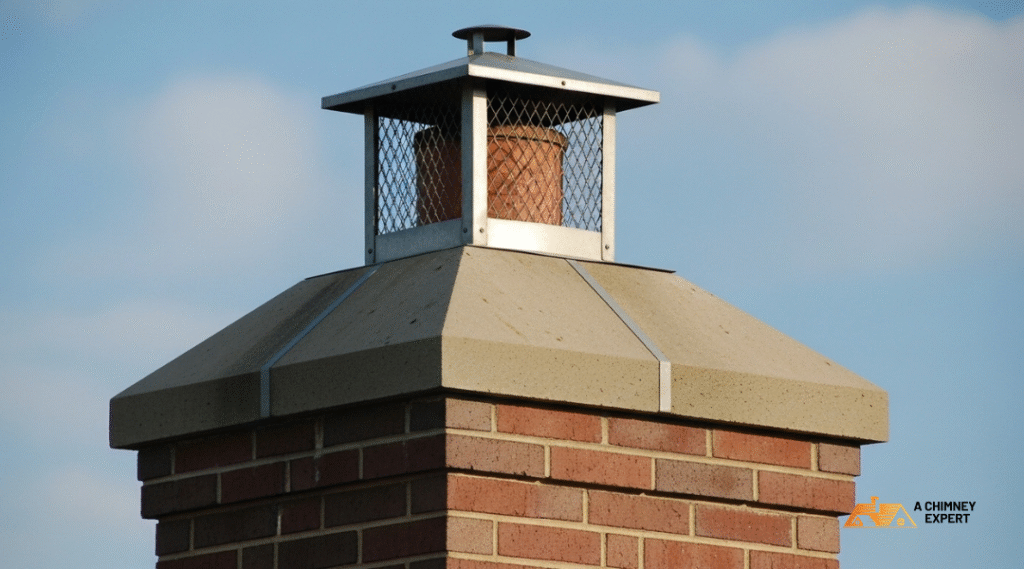
The cap blocks rain, snow, animals, and debris from entering the flue. The crown, on the other hand, protects the entire chimney structure from water infiltration and weather exposure.
Think of it this way:
- Crown = protects the whole top surface of the chimney
- Cap = protects the flue opening only
Both are necessary, but they serve different purposes. When combined, they give your chimney the best defense against water and outside elements.
Why Chimney Crowns Are Essential for Home Safety
A chimney crown keeps water, weather, and debris out of your chimney system. It also helps protect the masonry structure from long-term damage and reduces risks that could affect both your home and your safety.
Protection Against Water Damage
Water is the biggest threat to a masonry chimney. Without a proper crown, rain and snow can seep into the bricks and mortar. When temperatures drop, trapped moisture freezes and expands, causing cracks that grow worse over time.
A well-built crown acts as a shield. It slopes outward so water runs off instead of pooling on top. This design prevents leaks from reaching the flue or chimney walls.
Moisture problems often lead to mold, mildew, and musty odors inside your home. By blocking water entry at the top, the crown helps maintain healthier indoor air and reduces the chance of costly repairs.
Preventing Structural Deterioration
When water enters the chimney structure, mortar joints weaken and bricks can crumble. Over the years, this damage spreads and compromises the stability of the entire stack.
A strong chimney crown slows this process by keeping moisture out of the masonry. This protection helps preserve the original strength of the chimney and extends its lifespan.
If ignored, deterioration may require partial rebuilding or full replacement. Both are expensive and disruptive. Maintaining the crown is a more practical way to avoid these larger problems.
Signs of structural damage include:
- Loose or missing mortar
- Spalling bricks (surface flaking or breaking)
- Visible cracks near the top of the chimney
Enhancing Fire Safety
A damaged or missing crown can allow debris, leaves, or even small animals to enter the chimney. These blockages reduce airflow and increase the risk of smoke backing up into your home.
Poor ventilation also raises the chance of creosote buildup, which is a common cause of chimney fires. By sealing the top, the crown helps keep the flue clear and functioning properly.
In addition, a crown reduces the chance of sparks escaping onto the roof. This extra layer of protection lowers the risk of accidental fires starting outside the chimney.
Regular inspection ensures your crown continues to provide these safety benefits.
Common Problems with Chimney Crowns
A chimney crown protects the top of your chimney from water, debris, and weather exposure. When it is damaged, built poorly, or made from the wrong materials, it can allow leaks and structural problems that affect both the chimney and your home.
Cracks and Weather Damage
Cracks are the most common issue with chimney crowns. Over time, exposure to rain, snow, and freezing temperatures causes concrete to expand and contract. This stress creates small gaps that grow larger if left untreated.
Water often seeps into these cracks. When the temperature drops, the trapped water freezes and expands, making the damage worse. This freeze-thaw cycle can lead to pieces of the crown breaking away.
Even small cracks should not be ignored. They let in moisture that can damage the chimney masonry or leak into your home. Using a waterproof sealant or having a professional apply a crown coating can help prevent further deterioration.
Poor Construction or Improper Materials
Many crowns fail because they were not built correctly in the first place. Some are made with mortar instead of poured concrete. Mortar is more porous and absorbs water easily, which leads to faster breakdown.
A proper crown should be made of solid concrete and shaped with a slight slope. This slope allows water to run off instead of pooling on top. Without this design, water sits on the surface and increases the risk of cracks.
Another mistake is building the crown too thin. A thin crown offers little protection and wears down quickly. You should ensure that your chimney crown is at least a few inches thick and extends past the chimney walls to direct water away.
Signs Your Chimney Crown Needs Repair
You can often spot crown problems with a simple inspection. Look for visible cracks, crumbling edges, or pieces of concrete missing from the top. These are common signs that repairs are needed.
Water stains on the interior walls near your fireplace may also point to crown damage. Moisture entering through the crown can travel down the chimney and show up inside your home.
If you notice rust on your firebox or dampness around the chimney, these are also warning signs. Scheduling a professional inspection each year helps you catch these issues early before they lead to more expensive repairs.
Chimney Crown Repair vs. Replacement
Your chimney crown can often be fixed with minor repairs if the damage is limited, but in other cases a full replacement is the safer and more cost-effective choice. The right option depends on the size of the cracks, the condition of the materials, and whether water has already caused deeper structural damage.
When a Simple Repair Is Enough
If you notice small surface cracks or chips, a repair is usually all that’s needed. Professionals often use waterproof sealants or patching compounds to close these gaps and prevent moisture from seeping into the masonry. These materials protect the crown while extending its lifespan.
Repairs are also effective when the crown is still structurally sound but showing early wear. Sealing the surface can slow down deterioration and give you more years before a replacement becomes necessary.
In some cases, a repair may act as a temporary solution. For example, if you plan to replace the crown in the near future but need to stop leaks immediately, a patch or seal can buy you time.
Repairs are best suited for:
- Hairline cracks
- Minor chips
- Early signs of erosion
- Crowns that are otherwise stable
Indicators Replacement Is the Better Option
A crown with large cracks, missing sections, or crumbling concrete usually requires full replacement. Repairs won’t restore strength if the structure is already breaking down. Water damage that has spread into the chimney’s bricks or mortar is another clear sign that patching won’t be enough.
Older crowns often need replacement because age weakens the materials, even if previous repairs were done. Improper construction is another factor. If the crown was built too thin or without the right slope for water runoff, replacing it with a properly built version is the only reliable fix.
Replacement is recommended when:
- Cracks are deep or widespread
- Water damage has reached masonry
- The crown is more than a few decades old
- The original construction was flawed
Costs and Long-Term Value
Repairs are usually less expensive, often involving only sealant or patching materials. These fixes can range from a few hundred dollars depending on the extent of the work. Replacement costs more because it requires removing the old crown, rebuilding with durable materials, and ensuring proper slope and thickness.
While the upfront cost of replacement is higher, it often provides greater long-term value. A new crown built correctly can last decades with minimal maintenance. In contrast, repeated repairs may add up over time and still leave your chimney vulnerable to leaks.
When comparing options, weigh the age of your chimney, extent of damage, and your long-term plans. Spending more upfront on a replacement may save you from recurring water problems and higher repair bills later.
Materials and Techniques for Chimney Crowns
The strength and durability of your chimney crown depend on the materials used and the way it is installed. Choosing the right mix, applying proper waterproofing, and ensuring skilled workmanship will protect the flue liner and masonry below from costly water damage.
Traditional Mortar vs. Concrete Crowns
Many older chimneys were capped with a simple mortar wash. While inexpensive, this method is weak against freeze-thaw cycles and often cracks within a few years. Mortar is porous, so water seeps in, expands when frozen, and quickly breaks the surface apart.
Concrete crowns, by contrast, are far more durable. A properly mixed concrete slab—often reinforced with rebar or wire mesh—creates a dense, weather-resistant barrier. Unlike mortar, concrete can be formed with an overhang and drip edge, which directs rainwater away from the chimney walls.
A well-built concrete crown also provides better support for the top of the chimney and protects the flue liner from exposure. This helps prevent leaks into the chimney system and reduces the risk of structural deterioration over time.
Modern Waterproof Sealants
Even the best concrete crown benefits from added protection. Today, high-quality waterproof sealants are applied to the crown surface to block moisture penetration. These coatings are vapor-permeable, meaning they allow trapped moisture inside the masonry to escape while stopping rainwater from entering.
Sealants also reduce the chance of hairline cracks spreading. By sealing the surface, you limit water absorption that could otherwise freeze and expand. This is especially important in climates with harsh winters or frequent storms.
Not all coatings are the same. Silicone-based or elastomeric sealants typically last longer and provide stronger resistance than basic acrylic coatings. Reapplying every few years ensures the crown continues to shed water effectively and protects the flue liner and chimney walls below.
Importance of Professional Installation
Improper installation is one of the most common reasons chimney crowns fail. A crown that is too thin, lacks reinforcement, or does not extend past the chimney walls will not last. Small mistakes, such as skipping a drip edge, can lead to water seeping into the brickwork.
A trained chimney professional knows how to set forms, pour the correct thickness of concrete, and create the right slope for water runoff. They also ensure the crown fits tightly around the flue liner without sealing it rigidly, allowing for natural thermal expansion.
By relying on skilled installation, you avoid premature cracking, leaks, and costly repairs. This step is just as important as the choice of materials when it comes to long-term chimney protection.
How to Spot Chimney Crown Issues Early
Catching chimney crown problems before they spread helps you avoid water leaks, masonry damage, and costly repairs. Small changes like cracks, stains, or moisture marks often point to bigger issues that need attention from a chimney inspection.
Visible Cracks or Chipping
The crown sits at the very top of your chimney, so spotting damage from the ground can be difficult. Still, you may notice fine cracks or chipped pieces of concrete around the base or in your gutters. These fragments often break off when water seeps in and freezes.
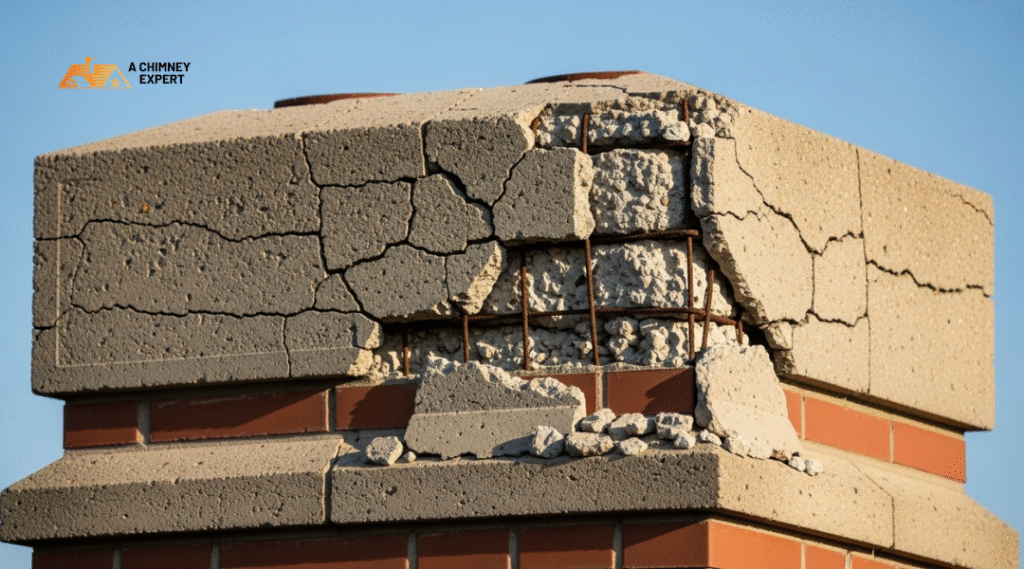
Even small cracks allow moisture to enter. Once inside, the freeze-thaw cycle can widen the gaps and cause spalling, which weakens the crown.
Use binoculars to check for surface lines or missing sections if you cannot get a close look. If you see any sign of crumbling or flaking, schedule a chimney inspection. Acting early prevents the need for full crown replacement, which is more expensive than sealing or patching small problem areas.
Leaks or Stains Inside the Home
Water stains on walls or ceilings near your fireplace often trace back to a damaged crown rather than the roof. If rainwater bypasses the crown, it can run down the flue or seep into the chimney’s masonry.
Signs to watch for include:
- Brown or yellow stains on drywall near the chimney
- Peeling paint or bubbling plaster above the fireplace
- Musty odors from trapped moisture in the chimney system
These issues suggest that your crown is no longer keeping water out. Ignoring them risks structural damage to both the chimney and nearby parts of your home. A professional chimney inspection can confirm the source and recommend sealing, waterproofing, or crown repair as needed.
Seasonal Inspection Tips
Because the crown is exposed to weather year-round, seasonal checks are essential. Heavy rain, snow, and freeze-thaw cycles all speed up crown deterioration.
Plan for at least one chimney inspection each year, ideally before winter. Professionals can spot hairline cracks, worn mortar joints, or early signs of leaks that you may miss from the ground.
Between inspections, do a quick check yourself after major storms. Look for fallen debris, rust streaks from metal caps, or darkened bricks below the crown. These surface changes are often the first visible warnings of water intrusion.
Taking small steps like installing a chimney cap or applying waterproof sealant also helps reduce weather damage and extend the crown’s lifespan.
Professional Chimney Crown Services in Oak Grove, Virginia
Keeping your chimney crown in good condition prevents water damage, protects the structure of your chimney, and reduces the need for costly rebuilds. Professional services focus on proper inspection, skilled repairs, and long-term maintenance that match the specific needs of homes in Oak Grove.
Why Choose A Chimney Expert LLC
You want a service provider who understands how to handle masonry, waterproofing, and crown rebuilding with precision. At A Chimney Expert LLC, trained technicians use proven methods and durable materials designed to extend the life of your chimney crown.
Unlike general contractors, chimney specialists focus on preventing water from seeping into mortar joints and brickwork. This attention to detail helps protect your fireplace system from cracks, leaks, and structural weakness.
You also benefit from clear communication and upfront pricing. Estimates include details about materials, labor, and the scope of work so you know what to expect before repairs begin.
Key services include:
- Crown sealing and coating
- Full crown rebuilds
- Masonry crack repair
- Waterproofing applications
Our Process: Inspection, Repair, and Maintenance
Every job begins with a detailed inspection. Technicians check for cracks, crumbling mortar, and signs of water penetration. Video tools may also be used to assess internal damage if needed.
If your crown only shows minor cracks, a flexible sealant or protective coating can be applied. This prevents further deterioration without the expense of a full rebuild. For larger damage, a new crown is built using concrete designed to withstand weather changes.
After repairs, you receive maintenance recommendations. Regular inspections, usually once a year, help ensure your chimney crown continues to protect the chimney structure. Preventive care often costs less than waiting until major repairs are required.
Local Expertise Serving Oak Grove and Surrounding Areas
Working with a local company gives you the advantage of technicians who understand the climate and building styles in Oak Grove. Seasonal weather, including heavy rain and winter freezing, often causes crowns to crack or deteriorate faster.
A Chimney Expert LLC tailors solutions to these conditions. Materials are chosen for durability against moisture and temperature changes common in Virginia.
You also gain reliable scheduling and faster service response. Local crews are available for both routine maintenance and urgent repairs, reducing wait times and keeping your chimney safe year-round.