Understanding the components of your fireplace system is crucial for proper maintenance and safety. Many homeowners confuse the smoke chamber and firebox, two distinct parts that serve different functions in your fireplace design. The firebox is where combustion occurs and fuel burns, while the smoke chamber is the funnel-shaped area above the firebox that helps direct smoke and gases toward the chimney liner.
These components work together with other parts of a fireplace including the chimney damper, throat damper, and chimney cap to create an efficient venting system. When you know the difference between your smoke chamber and firebox, you can better identify potential problems and communicate effectively with chimney professionals. Your mantel may be the most visible feature, but these hidden components determine whether your fireplace operates safely.
Recognizing common issues in both areas can save you money and prevent dangerous situations like poor ventilation or structural damage. From maintenance requirements to repair costs, each component presents unique challenges that require different approaches and expertise.
What Is a Firebox?
A firebox is the combustion chamber where fires burn inside your fireplace, built from heat-resistant materials to withstand extreme temperatures. It serves as the foundation component that contains flames and directs smoke toward the chimney system.
Definition and Purpose
The firebox functions as the primary combustion area of your fireplace where you build and maintain fires. This chamber has a box-like shape with two or three walls that contain the direct heat and flames from burning wood or other fuel sources.
Your firebox brings together all major fireplace components including the hearth, fireplace opening, and chimney connection. It creates a controlled environment for combustion while protecting your home’s structure from extreme heat.
The firebox directs smoke and combustion gases upward through the throat opening into the smoke chamber. Without a properly functioning firebox, your wood-burning fireplace cannot operate safely or efficiently.
Materials Used (Brick, Refractory Panels, Masonry)
Firebrick serves as the most common material for firebox construction in traditional masonry fireplaces. These specialized bricks contain alumina and silica, which withstand repeated heating and cooling cycles without cracking or deteriorating.
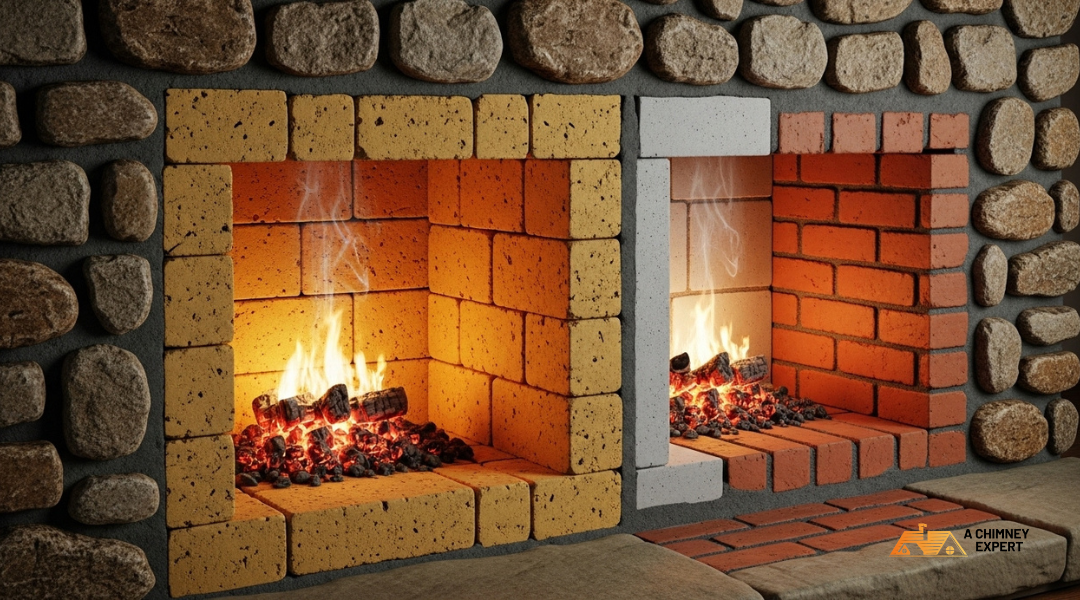
Refractory panels offer an alternative to traditional firebrick in some modern installations. These panels provide excellent heat resistance while being lighter than masonry materials.
Masonry construction remains the standard for most residential fireplaces. Masonry fireplaces use firebrick for the interior walls with regular brick or stone for the exterior structure.
The materials must have low thermal conductivity to prevent heat transfer to surrounding wooden framing. Proper mortar joints between firebricks ensure the firebox maintains its structural integrity under extreme temperature changes.
Role in Withstanding Direct Heat
Your firebox must handle temperatures exceeding 2,000 degrees Fahrenheit during active burning. The firebrick absorbs heat rather than transferring it to surrounding home structures, providing critical safety protection.
The firebox walls experience direct flame contact and must resist thermal shock from rapid temperature changes. Quality firebrick contains ceramic and ferric oxide additives that absorb high temperatures without cracking.
Heat resistance requirements include:
- Withstanding direct flame exposure
- Preventing heat transfer to wooden framing
- Maintaining structural integrity through heating cycles
- Resisting corrosion from combustion byproducts
The fireplace opening size determines the firebox dimensions, which must be proportioned correctly for proper draft and combustion efficiency. A damaged firebox can allow dangerous heat transfer into your home’s structure.
What Is a Smoke Chamber?
A smoke chamber serves as the critical transition zone that channels combustion gases from your fireplace up through the flue system. This funnel-shaped component features angled walls and specialized coatings designed to create smooth airflow.
Location Above the Firebox
The smoke chamber sits directly above your firebox and damper assembly. It occupies the space between the wide opening of your fireplace and the narrow entrance to the flue.
This positioning allows the smoke chamber to receive all combustion gases rising from the fire below. The chamber connects to the throat opening, which is the slot-like passage immediately above the damper.
Your smoke chamber extends upward until it meets the flue entrance. The flue typically consists of terracotta tiles or metal liner that carries smoke to the exterior.
The damper mechanism sits between the firebox and smoke chamber. When opened, it allows combustion gases to enter the chamber and continue their journey upward.
How It Directs Smoke to the Flue
The smoke chamber compresses and guides smoke from the wide firebox opening into the narrower flue entrance. This compression creates the draft necessary for proper smoke removal.
Combustion gases enter the chamber and mix in circular motions before rising into the flue. This mixing action helps maintain consistent upward flow and prevents backdraft conditions.
The chamber’s angled walls accelerate smoke movement by creating a venturi effect. This acceleration increases draft strength and improves overall fireplace efficiency.
Key airflow functions include:
- Compressing smoke from wide to narrow openings
- Creating upward draft pressure
- Preventing downdrafts from entering the firebox
- Facilitating complete combustion gas removal
Typical Design Features (Sloped Walls, Parge Coating)
Modern smoke chambers feature sloped masonry walls that angle inward from the firebox width to the flue diameter. These smooth transitions eliminate turbulence that could disrupt proper airflow.
The walls typically receive a parge coating – a smooth cement-like surface that prevents creosote buildup. This coating fills gaps between bricks and creates an even interior surface.
Older homes often contain corbeled smoke chambers with step-like brick patterns. These create cracks where creosote accumulates, increasing fire risk compared to parged surfaces.
Standard design elements:
- Inverted funnel shape
- 30-45 degree wall angles
- Smooth parge coating application
- Proper dimensioning for flue size matching
The smoke shelf sits at the chamber’s base, deflecting downdrafts away from the firebox opening.
Key Differences Between Smoke Chamber and Firebox
The firebox sits at the bottom where you build fires, while the smoke chamber acts as a transition zone above it. These components differ significantly in location, heat exposure, and construction materials.
Location in the Chimney Structure
The firebox forms the foundation of your chimney structure. It sits directly at the base where you place logs and create fires.
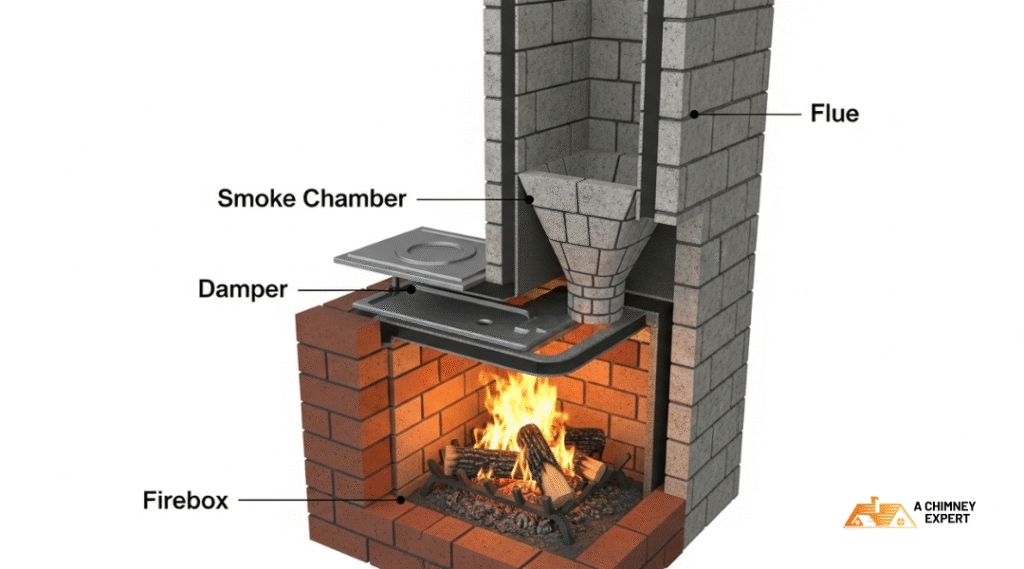
You’ll find it lined with firebrick and designed to contain the actual combustion process. The firebox connects directly to your home’s interior through the fireplace opening.
The smoke chamber sits above the firebox and damper system. It occupies the space between your firebox and the flue opening.
This component creates a funnel-like transition zone. The smoke chamber gradually narrows from the width of your firebox to match the smaller flue opening above.
The damper typically separates these two areas. When open, it allows smoke to flow from the firebox into the smoke chamber.
Function and Heat Resistance
Your firebox handles direct flame contact and extreme temperatures. It must withstand temperatures exceeding 2,000°F during active fires.
The firebox contains the combustion process completely. It prevents flames and burning materials from escaping into your home.
Firebox responsibilities:
- Direct fire containment
- Maximum heat resistance
- Structural fire support
The smoke chamber manages cooler exhaust gases. It experiences temperatures around 300-800°F as smoke passes through.
Your smoke chamber compresses combustion byproducts without causing backdraft. Its sloped walls direct smoke upward into the flue efficiently.
The smoke chamber prevents turbulence that could force smoke back into your room. It creates smooth airflow transitions.
Common Materials and Construction
Firebox construction uses specialized fire-resistant materials. Firebrick forms the primary lining material because it contains alumina and silica.
These materials withstand repeated heating and cooling cycles. Firebrick absorbs heat rather than transferring it to surrounding structures.
You’ll also find refractory mortar between firebricks. This mortar maintains structural integrity under extreme temperatures.
Smoke chambers use different construction approaches. Older versions feature stepped brick patterns that can obstruct airflow.
Modern smoke chambers require smooth, parged surfaces. Chamber-tech 2000 or similar products create these smooth finishes.
The smooth surface improves draft efficiency significantly. It reduces turbulence and prevents smoke from backing up into your home.
Building codes now mandate smooth smoke chamber walls. The stepped brick construction of older chimneys often needs updating for optimal performance.
Why the Distinction Matters for Homeowners
Understanding the difference between your firebox and smoke chamber directly impacts your home’s safety, energy costs, and chimney longevity. Each component requires different maintenance approaches and presents unique risks when problems develop.
Safety and Fire Prevention
The firebox and smoke chamber face different safety challenges that require targeted attention. Your firebox contains the actual fire and reaches temperatures around 1,000 degrees during normal use.
The smoke chamber poses greater fire risks during chimney fire events. Temperatures can reach up to 2,000 degrees in this area during a chimney fire. This makes proper smoke chamber construction and maintenance critical.
Key safety differences include:
- Firebox cracks allow heat to reach combustible materials in walls
- Smoke chamber damage creates draft problems that cause smoke backdraft
- Rough smoke chamber surfaces trap creosote buildup more easily
Many homeowners focus on visible firebox damage while ignoring smoke chamber issues. Chimney sweeps often miss smoke chamber problems during inspections because this area is difficult to access and examine thoroughly.
Unlined or damaged smoke chambers create serious fire hazards. The transitional space between your firebox and flue needs smooth surfaces to prevent creosote accumulation and ensure proper smoke flow.
Energy Efficiency and Draft Control
Your firebox and smoke chamber work together to create proper draft, but each affects energy efficiency differently. The firebox size and design determine how much heat enters your home versus escaping up the chimney.
Poor smoke chamber design wastes energy by disrupting airflow patterns. When smoke cannot flow smoothly from the wide firebox opening to the narrow flue, your fireplace loses efficiency.
Energy efficiency factors:
- Firebox depth affects heat reflection into your room
- Smoke chamber slope determines draft strength
- Surface smoothness impacts airflow resistance
A properly constructed smoke chamber should slope gradually from your firebox to the flue opening. Sharp angles or corbelled construction create turbulence that reduces draft and allows heat to escape unnecessarily.
Rough smoke chamber surfaces increase friction and slow smoke movement. This forces your fireplace to work harder to maintain proper draft, reducing the heat output you receive.
Long-Term Chimney Durability
Different materials and construction methods affect how your firebox and smoke chamber age over time. Firebox repairs typically involve replacing firebrick, which homeowners can often see and monitor.
Smoke chamber deterioration happens out of sight and progresses differently. Unlined smoke chambers built with standard brick and mortar degrade faster under high temperatures.
Durability considerations:
- Firebox damage appears as cracked or missing firebricks
- Smoke chamber problems include mortar joint failure and structural settling
- Parging applications protect smoke chamber surfaces from heat damage
Most smoke chambers require parging to create smooth surfaces and protect masonry from temperature stress. This specialized coating must be reapplied periodically to maintain effectiveness.
Firebox maintenance focuses on replacing worn firebricks and checking damper operation. Smoke chamber care involves inspecting parging condition and ensuring proper structural integrity throughout the transitional space.
Common Problems in Fireboxes
Fireboxes face constant exposure to extreme temperatures, which causes specific types of deterioration over time. The most frequent issues involve structural damage to masonry components and protective panel systems.
Cracks and Damaged Mortar
Temperature cycling creates the primary cause of firebox damage. When you burn fires, the intense heat expands the materials, then cooling contracts them again.
This repeated expansion and contraction puts stress on brick and mortar joints. Over time, the mortar begins to crack and crumble.
Damaged mortar joints allow heat and combustion gases to escape into areas where they shouldn’t go. This creates serious safety hazards for your home’s structure.
Water infiltration through damaged mortar accelerates the deterioration process. Moisture freezes and expands during winter months, widening existing cracks.
You’ll notice loose or missing mortar falling into the firebox area. White staining on brick surfaces indicates water damage and mineral deposits from moisture penetration.
Worn or Broken Refractory Panels
Many modern fireboxes use refractory panels instead of traditional brick construction. These panels are designed to withstand high temperatures and protect the surrounding structure.
Panel deterioration occurs from repeated heating cycles and direct flame contact. The panels may develop cracks, chips, or complete breaks.
Damaged refractory panels lose their protective capabilities. Heat can then reach combustible materials in your home’s framing or walls.
Panel replacement becomes necessary when damage compromises the protective barrier. You cannot safely operate your fireplace with broken or missing refractory panels.
Some panels may warp or bow outward from excessive heat exposure. This creates gaps that allow heat to escape the contained firebox area.
Signs Repairs Are Needed
Visible cracks in brick or panels indicate immediate attention is required. Even small cracks can quickly expand under heat stress.
You may notice pieces of brick, mortar, or panel material falling into the firebox. This debris accumulation signals active deterioration.
White staining on firebox walls shows water penetration and chemical breakdown of materials. This efflorescence appears as chalky deposits.
Difficulty starting fires or poor burning performance can indicate structural problems affecting airflow. Damaged fireboxes don’t direct smoke properly toward the chimney.
Heat damage to surrounding areas like the mantel or wall materials suggests the firebox isn’t containing heat effectively.
Common Problems in Smoke Chambers
Smoke chambers face three primary issues that affect both safety and functionality. Creosote accumulation on rough surfaces increases fire risk, while draft problems cause smoke to enter your living space instead of exiting through the chimney.
Creosote Buildup and Rough Surfaces
Unfinished or roughly constructed smoke chamber walls create prime conditions for creosote accumulation. The sticky, flammable substance adheres more readily to irregular surfaces than smooth ones.
Hand-parged smoke chambers often contain unsealed areas and rough textures. These surfaces trap creosote deposits as smoke passes through the chamber.
Creosote buildup creates serious fire hazards:
- Ignites at temperatures around 451°F
- Burns extremely hot once ignited
- Spreads rapidly through the chimney system
Cracks and gaps in the brickwork allow hot gases to escape into your home’s walls. This condition becomes particularly dangerous when combined with creosote deposits, as sparks can ignite the flammable material.
Draft Issues and Poor Smoke Flow
Oversized smoke chambers create draft problems that force smoke into your room instead of up the chimney. The chamber fails to properly compress and direct combustion gases toward the flue.
Poor draft conditions occur until your fire reaches sufficient temperature. Your fireplace may smoke excessively during startup, making it difficult to establish proper airflow.
Improperly angled walls disrupt the smooth flow of smoke and gases. The chamber should have sloped surfaces that gradually transition from the firebox opening to the flue entrance.
Structural Deterioration Without Parging
Unprotected masonry surfaces deteriorate rapidly from exposure to heat and acidic combustion byproducts. The brick and mortar joints weaken over time without proper sealing.
Common structural problems include:
- Crumbling mortar joints
- Loose or displaced bricks
- Deteriorating smoke shelf integrity
Unsealed surfaces allow moisture penetration during rain or snow. The freeze-thaw cycle accelerates masonry damage, creating larger cracks and gaps.
Missing or inadequate parging leaves the smoke chamber vulnerable to both heat damage and water infiltration. These conditions compromise the entire chimney structure’s safety and effectiveness.
Repair and Maintenance Solutions
Both fireboxes and smoke chambers require specific repair techniques and regular maintenance to function safely. Professional chimney sweep services can identify issues early and perform specialized repairs like refractory panel replacement and smoke chamber parging.
Firebox Repair and Rebuilding Options
Firebox repairs vary significantly between masonry and pre-fabricated units. In pre-fab fireplaces, cracked refractory panels must be replaced immediately since even small openings allow dangerous temperatures to escape.
These ceramic panels withstand temperatures up to 1,800°F. When damaged, they compromise the entire fireplace system’s safety.
Masonry Firebox Issues:
- Cracked or broken firebricks from heat exposure
- Water damage from leaks or open dampers
- Deteriorated mortar joints
- Non-refractory materials in older construction
Water intrusion accelerates firebox deterioration by softening firebricks and corroding metal components. This moisture enters through damaged chimney crowns, missing caps, or defective flashing.
Repair options include parging damaged surfaces with refractory materials or complete firebox rebuilding for extensive damage. Professional assessment determines whether repair or replacement provides the most cost-effective solution.
Smoke Chamber Parging and Sealing
Smoke chamber parging involves applying a smooth refractory coating to rough masonry surfaces. This process eliminates the stepped brick pattern common in older smoke chambers.
The Chimney Safety Institute of America recommends smooth smoke chamber walls to prevent turbulence and improve draft efficiency. Rough surfaces create air pockets that can cause smoke to enter your home.
Parging Benefits:
- Seals gaps and cracks in masonry
- Creates proper smoke flow patterns
- Reduces fire hazards from exposed mortar joints
- Improves overall chimney performance
Professional parging uses specialized refractory materials designed for high-temperature applications. This coating must bond properly to existing masonry while maintaining flexibility during thermal expansion.
Regular fireplace maintenance includes inspecting smoke chamber surfaces for deterioration or damage that could affect safe operation.
Importance of Professional Inspections
Annual chimney sweep inspections identify problems before they become safety hazards. Certified professionals assess both firebox and smoke chamber conditions using specialized equipment and knowledge.
Professional inspections reveal hidden issues like structural damage, improper construction, or deteriorated components. These problems often go unnoticed during casual visual checks.
Inspection Benefits:
- Early detection of safety issues
- Prevention of costly repairs
- Compliance with insurance requirements
- Carbon monoxide risk assessment
Chimney professionals provide written estimates detailing necessary repairs and their urgency. They understand local building codes and proper repair techniques for different fireplace types.
DIY repairs on fireboxes or smoke chambers can create serious safety risks. Improper materials or techniques may increase fire danger or carbon monoxide exposure throughout your home.
How A Chimney Expert LLC Helps in Oak Grove, VA
A Chimney Expert LLC provides specialized services for smoke chambers, fireboxes, and complete chimney systems in Oak Grove, Virginia. Their certified technicians address airflow issues, structural repairs, and safety concerns that directly impact your fireplace’s performance.
Local Knowledge of Chimney Systems
A Chimney Expert LLC brings decades of experience working specifically with Virginia’s climate conditions and common chimney issues. They understand how seasonal temperature changes affect smoke chamber performance and firebox operation in the Oak Grove area.
Their technicians recognize local building codes and installation standards. This knowledge helps them identify problems unique to Virginia homes, such as moisture-related damage in smoke chambers or inadequate insulation around fireboxes.
Common local issues they address:
- Smoke chamber deterioration from humidity
- Firebox cracking due to freeze-thaw cycles
- Draft problems caused by regional weather patterns
- Structural damage from Virginia’s clay soil settling
The company tailors solutions to your specific chimney system. They provide advice on airflow management and safe operation practices that work best for Oak Grove’s environmental conditions.
Certified Repairs and Maintenance
A Chimney Expert LLC handles both smoke chamber and firebox repairs with certified expertise. Their technicians fix structural issues like cracked smoke chamber walls, damaged fireboxes, and faulty damper systems.
They perform specialized repairs including smoke chamber parging and firebox rebuilding. These services restore proper smoke flow and prevent dangerous backdrafting issues.
Key repair services include:
- Smoke chamber reconstruction and parge coating
- Firebox brick replacement and repointing
- Damper repair and replacement
- Smoke shelf restoration
The company ensures repairs meet safety standards and building codes. They use proper materials designed for high-temperature applications in both smoke chambers and fireboxes.
Preventive Services for Safer Chimneys
A Chimney Expert LLC offers annual inspections that examine both your smoke chamber and firebox for early signs of damage. These inspections help prevent costly repairs and dangerous conditions.
Their cleaning services remove creosote buildup from smoke chambers and debris from fireboxes. Proper cleaning maintains efficient airflow and reduces fire risks throughout your chimney system.
They provide guidance on safe fireplace operation and maintenance schedules. This includes advice on closing dampers properly and recognizing signs of smoke chamber or firebox problems.
Preventive services offered:
- Annual professional inspections
- Comprehensive cleaning of all chimney components
- Safety consultations and operation training
- Early problem identification and solutions
Regular maintenance from their certified team extends the life of your smoke chamber and firebox while keeping your family safe.