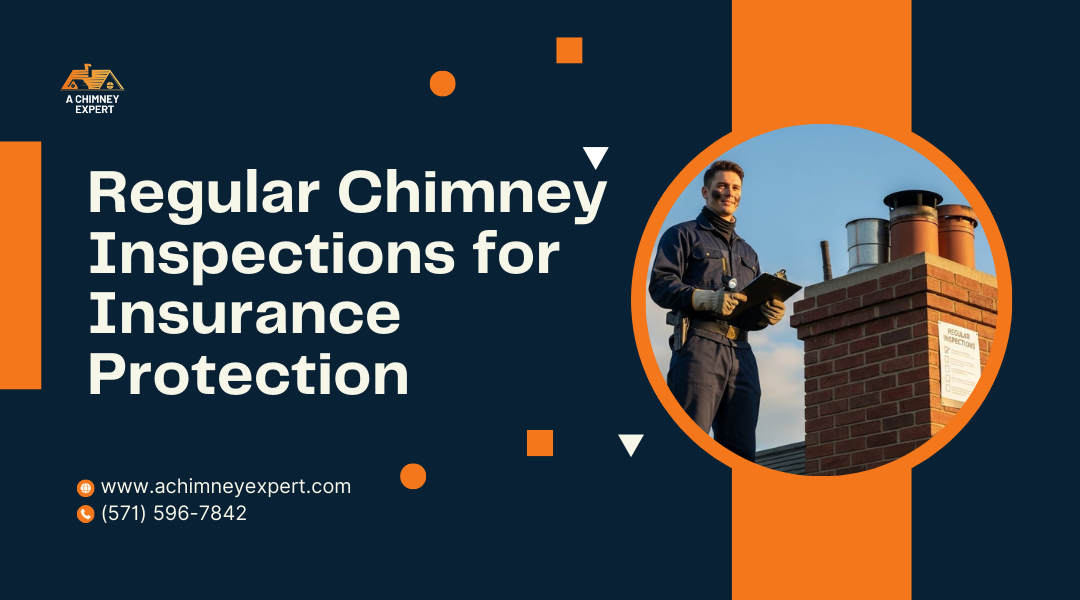
Your home insurance can only protect your property if you meet the conditions your policy requires. Regular chimney inspections help you stay compliant with your insurance coverage by proving that your home is safe and well maintained. Without proper documentation or maintenance, an insurance company can deny a claim related to chimney fires, smoke damage, or structural issues.
By scheduling annual inspections, you reduce the risk of fire hazards and costly repairs. You also show your insurer that you take safety and prevention seriously, which can make the claim process smoother if damage occurs. A certified inspection identifies cracks, creosote buildup, or ventilation problems before they become major hazards.
With standards like NFPA 211 guiding proper chimney care, you can protect both your safety and your policy’s validity. When certified professionals perform and document the inspection, your home, family, and coverage stay secure year-round.
Why Insurance Coverage Depends on Chimney Inspections
Your home insurance often hinges on how well you manage potential fire and structural risks. Regular chimney inspections confirm that your heating systems meet safety standards, helping you stay eligible for coverage and avoid claim denials.
The Importance of Risk Reduction for Insurers
Insurance providers base coverage decisions on risk. A neglected chimney increases the chance of fire, carbon monoxide buildup, and structural deterioration—all of which raise claim potential. When you schedule routine chimney inspections, you reduce these risks and show your insurer that your property meets safe maintenance standards.
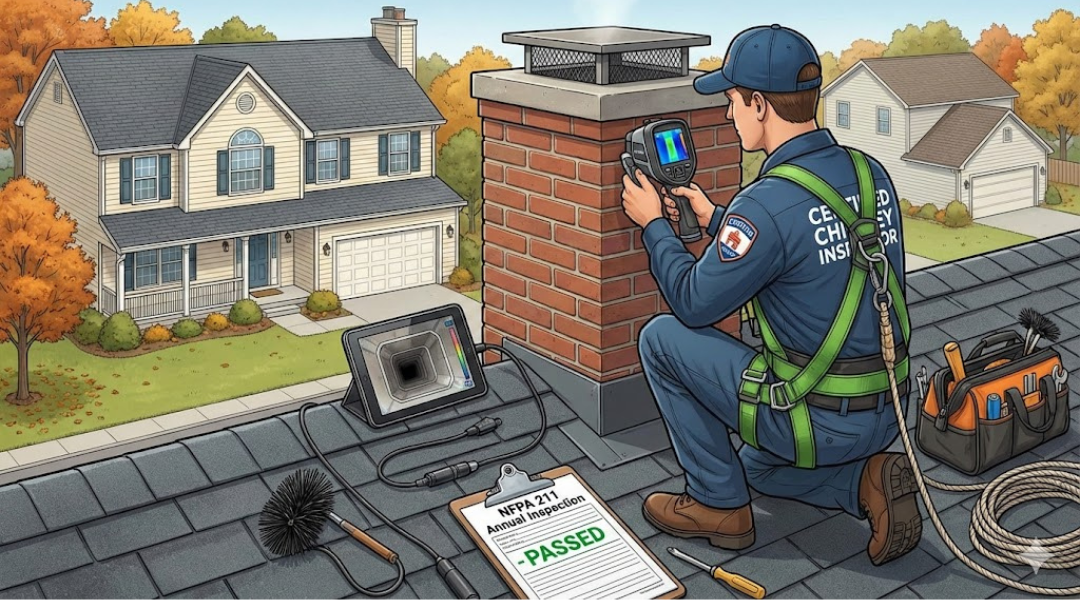
According to NFPA 211, chimneys should be inspected at least once a year to verify they are free of blockages and damage. Following these guidelines minimizes fire hazards caused by creosote buildup and ensures proper ventilation.
Insurers generally view consistent inspection records as proof of responsible maintenance. This lowers your perceived risk, which can help prevent policy cancellations or higher premiums due to safety concerns. In short, regular inspections benefit both you and your insurance provider by keeping loss exposure low.
Requirements Outlined in Insurance Policies
Many home insurance policies include specific terms related to maintenance. These requirements often state that systems such as fireplaces and chimneys must be properly inspected and cleaned. Your insurer uses this information to decide whether to approve or deny coverage after an incident.
If damage results from neglect or ignored warnings from a past inspection, your claim may be reduced or denied. Some insurance providers may even require an annual inspection certificate as a policy condition. This ensures your chimney meets the insurer’s safety criteria before they assume financial risk.
Example of typical policy conditions:
| Policy Requirement | Purpose |
|---|---|
| Annual chimney inspection | Confirms ongoing maintenance |
| Proof of compliance with NFPA 211 | Verifies safety standards |
| Certified inspection report | Serves as documentation during claims |
Meeting these conditions keeps your insurance policy active and protects your eligibility for claim reimbursement.
The Role of Certified Documentation
An inspection’s value depends on who performs it and how it’s documented. When a professionally certified technician conducts the inspection, the report carries more weight with your insurance provider. Certified documentation confirms that your chimney meets industry standards such as those in NFPA 211 or the International Building Code (IBC).
You should keep copies of every inspection report and cleaning receipt. If you ever file a claim after a chimney fire or related damage, your insurer may request this documentation to verify maintenance compliance.
Providing certified inspection records can simplify the claim process and reduce disputes. It shows that you acted responsibly to prevent loss, which can improve your standing with your insurer and help avoid coverage delays or denials.
How Regular Chimney Inspections Minimize Fire Hazards
Regular chimney inspections keep your heating system safe and efficient by identifying problems before they cause fires or air quality issues. They ensure that creosote buildup, blockages, and structural damage do not turn your chimney into a fire hazard or allow dangerous gases to enter your home.
Detecting Creosote Buildup Early
Creosote forms when smoke and unburned gases cool inside the chimney. Over time, this sticky, flammable coating builds up along the walls of the flue. Even a small amount can ignite when temperatures rise.
During a regular chimney inspection, technicians use flashlights, cameras, or mirrors to check the flue surface for creosote layers. They note if the buildup is light, moderate, or heavy. A thin soot layer signals normal use, but thick deposits show a serious risk for chimney fires.
If an inspection finds heavy residue, professional cleaning removes it safely. This step prevents blockages and improves airflow. Consistent chimney maintenance also limits future buildup because inspectors can identify burning habits or appliance issues that cause excessive creosote.
Preventing Chimney Fires
A chimney fire can reach over 2,000 degrees Fahrenheit, cracking tiles, melting metal, and spreading to nearby structures. These fires often happen quietly inside the flue until the damage becomes severe.
Regular chimney inspections help stop that from happening by revealing ignition sources such as loose masonry, missing caps, or improper venting. Specialists also look for signs of past fires like warped liners, flakes, or scorch marks. Identifying these problems early lowers the chance of future flare-ups.
You can reduce risks further by scheduling annual inspections, following professional cleaning recommendations, and using only dry, seasoned wood. Keeping the chimney clear lets gases move smoothly out of the home, protecting both structure and occupants.
Reducing Carbon Monoxide Risks
When chimneys become blocked or damaged, smoke and gases fail to vent properly. This can allow carbon monoxide (CO), a colorless and odorless gas, to enter your living space. Prolonged exposure may cause illness or even death.
An inspection verifies that your flue, liner, and damper work correctly. Inspectors test for cracks and obstructions that trap exhaust gases. They may also check that connected appliances—like a wood stove or furnace—vent efficiently.
By keeping the system sealed and unobstructed, you lower the chance of carbon monoxide leaks. Regular chimney inspections therefore protect both your home’s fire safety and its air quality, giving you a safer, more reliable heating system.
NFPA 211: The Standard for Insurance and Chimney Safety
NFPA 211 sets the national benchmark for how chimneys, fireplaces, and vents must be built, maintained, and inspected. Understanding and following this standard can reduce the risk of fire, improve the performance of your heating system, and keep your insurance coverage valid.
Understanding the Three Levels of Inspection
The National Fire Protection Association (NFPA) defines three inspection levels under the NFPA 211 standard. Each level serves a different purpose, depending on your chimney’s condition and recent history.
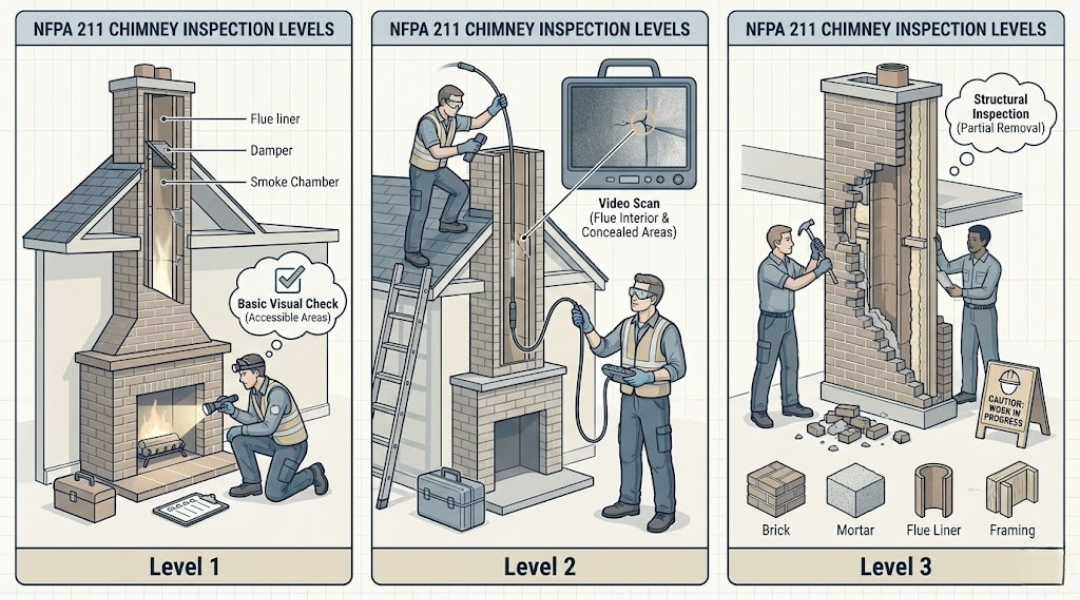
Level 1 inspections are the most basic. A certified chimney sweep checks easily accessible parts of the chimney for blockages, buildup, and visible damage. This level works for chimneys that have been used regularly and haven’t experienced major changes or problems.
Level 2 inspections are more detailed. They are required when you sell your home, after a chimney fire, or when making changes to the system. This inspection includes a camera scan of the flue to detect hidden cracks, gaps, or damage that could pose safety risks.
Level 3 inspections are the most invasive. These occur when serious structural issues are suspected. Technicians may need to remove parts of the chimney or adjoining walls to identify deeper problems.
| Inspection Level | When Required | Scope of Work |
|---|---|---|
| Level 1 | Routine annual inspection | Visual check of accessible areas |
| Level 2 | Property sale, damage, or installation changes | Includes video scan of flue |
| Level 3 | Suspected structural failure | May require opening walls or masonry |
Staying consistent with the correct inspection level ensures your system meets both safety and insurance requirements.
How NFPA 211 Impacts Insurance Claims
Your insurance company often depends on NFPA 211 compliance to determine whether damage or fire losses will be covered. If you skip inspections or fail to meet these standards, your claim could be delayed or denied.
Many insurers require annual documentation showing that your chimney has been inspected and maintained by a certified professional. This report verifies that the system meets NFPA guidelines and is free of safety hazards.
Regular inspections also show that you’ve taken preventive steps to reduce risk. This record can work in your favor during a claim review. For example, if a fire occurs despite proper maintenance, your compliance with NFPA 211 helps prove the damage was accidental—not due to neglect.
Keeping inspection records and service receipts in one place can simplify this process. It reassures your insurer that you maintain a safe home, lowering liability and maintaining eligibility for continued coverage.
Certified Chimney Sweeps and Professional Maintenance
Certified chimney sweeps ensure your chimney system meets safety and insurance standards through proper inspection and maintenance. Their training, insurance coverage, and adherence to professional codes reduce the risk of fire hazards and structural problems.
Benefits of Working With Certified Professionals
A certified chimney sweep has completed training, met industry standards, and passed exams that cover building codes, fire safety, and proper inspection procedures. This certification proves the sweep’s ability to identify problems such as creosote buildup, cracks in the flue, and blockages that could affect ventilation.
Certified professionals also follow strict safety guidelines. They use tools and methods that protect your home from damage during chimney cleaning and maintenance. Most carry liability insurance, which safeguards you financially in the rare event of accidental damage.
You receive detailed reports after an inspection, often including photos and recommendations for repairs or future maintenance. This documentation provides a clear record of your chimney’s condition, which can be useful for home insurance claims and resale purposes.
Key benefits include:
| Advantage | Description |
|---|---|
| Verified Expertise | Certification ensures proper knowledge of safety codes |
| Liability Protection | Most certified sweeps hold insurance coverage |
| Reliable Documentation | Reports confirm compliance and support insurance records |
Ensuring Compliance With Insurance Requirements
Many homeowner insurance policies require regular chimney inspections by qualified professionals to maintain coverage. Without proof of inspection, insurance claims related to fire or smoke damage might be denied.
Working with a certified chimney sweep helps you meet these requirements. Insurers often rely on reports from recognized professionals because they trust the accuracy and consistency of certified evaluations.
Local building codes may also require annual chimney maintenance for safety compliance. A certified sweep’s inspection and written verification demonstrate that your system meets these standards, helping you avoid possible fines or policy issues.
Scheduling regular visits—at least once a year—prevents lapses in insurance protection and ensures your chimney remains safe, clean, and properly documented.
Insurance Claims: Documentation and Compliance
Keeping accurate inspection and cleaning records supports your insurance coverage and helps prevent claim delays. Insurance providers often expect proof that you have maintained your chimney according to safety standards to reduce risks related to fire or structural damage.
Maintaining Records for Insurance
Your insurance provider may require documentation showing your chimney’s condition and maintenance history. You should keep written inspection reports, cleaning receipts, and any repair invoices. These records demonstrate your compliance with both the insurance policy requirements and national safety standards such as NFPA 211.
When filing a claim, documentation speeds the process and strengthens your case. Include details such as the inspection date, technician’s name, company certification, and findings. Photos of the chimney’s interior and exterior taken during inspections can serve as additional proof of maintenance and condition.
Store your records in both paper and digital forms. Backing them up electronically helps ensure you can access them if physical copies are lost during damage-related incidents. Organized documentation shows you acted responsibly, making it easier for your insurer to verify your claim and maintain your insurance coverage.
Impact of Lapsed or Inadequate Inspections
Skipping or delaying chimney inspections can affect your insurance coverage. Many policies require annual inspections and cleaning to stay active. A lapse in documentation or a missed appointment might lead your insurance provider to deny coverage for fire or smoke damage.
Without current inspection records, the insurer may view your home as higher risk. This could raise premiums or result in the cancellation of coverage. Outdated or incomplete inspection reports may also slow claim approval if a chimney-related issue occurs.
To avoid these problems, schedule inspections at least once a year and document the results promptly. Regular maintenance protects both your property and your compliance with policy requirements, ensuring reliable coverage when you need it most.
Chimney Types, Structure, and Insurance Considerations
Your chimney’s design and fuel source influence its upkeep requirements and how your insurance policy treats related risks. Regular inspections help ensure that the structure remains safe and that your coverage stays valid in case of damage or claims.
Unique Risks of Masonry Chimneys
Masonry chimneys are built from brick, mortar, and stone, making them durable but also vulnerable to specific forms of wear. Cracks, mortar joint erosion, and moisture penetration are frequent issues. These problems can lead to weakened structure or internal water damage, which insurers may not cover if they result from neglect.
Inspections help identify early signs of deterioration, such as crumbling mortar or spalling bricks. Addressing them promptly supports your insurance claim should a covered peril, like fire or wind damage, occur. Many insurance companies expect proof of maintenance when reviewing chimney-related claims.
| Common Masonry Risks | Possible Insurance Impact |
|---|---|
| Cracked mortar joints | May limit claim approval without prior repair evidence |
| Water leaks or interior seepage | Often considered a maintenance issue, not a covered event |
| Creosote buildup causing fire | Usually covered only if inspections and cleanings were maintained |
Consistent upkeep provides documentation that you took reasonable steps to prevent avoidable damage, improving your standing with insurers.
Wood Stove and Fireplace Coverage
A wood stove or wood-burning insert introduces additional insurance considerations. Because these systems generate intense heat, improper installation or chimney blockages can increase fire risk. Your insurer may require documentation that the unit meets local safety codes and that certified professionals perform annual inspections.
Policies often note “solid-fuel heating appliances” separately. You may need to list your wood stove as part of your coverage to avoid disputes during a claim. Proper venting, heat shielding, and chimney liners all factor into whether a claim is accepted after smoke or fire damage.
Keeping inspection records helps prove compliance with safety standards. It also reassures your insurer that your heating system operates safely and within their guidelines, protecting both your home and your policy coverage.