When you see “CSIA certified” on a chimney company’s website, it might seem like just another badge or credential. But this certification from the Chimney Safety Institute of America actually affects how your chimney gets inspected, what problems get caught, and how safely your fireplace operates. CSIA certification means a chimney professional has studied chimney safety standards, passed a national exam, and committed to ongoing education to stay current with best practices.
The chimney industry isn’t heavily regulated in most places. That means almost anyone can call themselves a chimney sweep without proving they know how to spot dangerous creosote buildup or identify structural problems. A CSIA certification sets a baseline for knowledge and skill that protects you from unqualified technicians.
This article explains what CSIA certification actually requires, how it shapes the work technicians do in your home, and what it doesn’t guarantee. You’ll learn how the certification process works, what certified professionals can and can’t do, and how to make informed decisions when hiring someone to work on your chimney.
Credential Scope And Professional Boundaries
CSIA certification covers specific technical areas related to chimney and venting systems, with clearly defined limits on what falls within and outside a technician’s authorized scope of work.
Knowledge Domains Covered By Certification
The CSIA Certified Chimney Sweep® credential focuses on the evaluation and maintenance of chimney and venting systems. Your certified technician has proven knowledge in identifying hazards like creosote buildup, structural damage, and blockages that could cause carbon monoxide poisoning or house fires.
The certification tests understanding of different chimney types including masonry, factory-built metal, and wood stove installations. Technicians learn proper inspection techniques using cameras and specialized tools. They must know how draft systems work and what causes backdrafting.
CSIA Certified Dryer Exhaust Technician® certification covers a separate domain. This credential focuses specifically on dryer vent systems, including proper installation standards, lint accumulation risks, and airflow requirements. The Chimney Safety Institute of America created this as the only national certification dedicated to dryer vent service.
Code Standards And Safety Protocols Referenced
CSIA certification aligns with the International Residential Code and National Fire Protection Association standards. Your certified sweep knows the current code requirements for clearances, liner installations, and cap specifications.
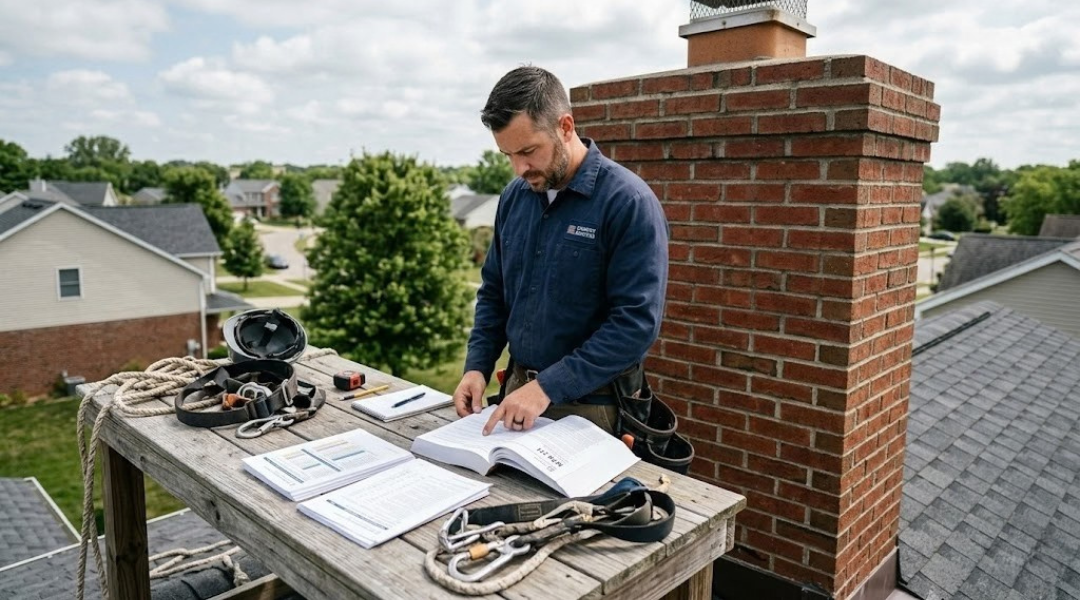
The training covers NFPA 211 (Standard for Chimneys, Fireplaces, Vents, and Solid Fuel-Burning Appliances) as the primary reference document. Technicians learn proper safety protocols for working on roofs and handling hazardous materials like asbestos insulation found in older homes.
Certification requires knowledge of manufacturer specifications for specific appliances and venting products. Your technician should verify that repairs meet both local building codes and insurance requirements.
Activities Outside Certification Authority
CSIA certification does not authorize structural repairs to your home’s framing or roofing systems. Your chimney sweep cannot legally perform electrical work, gas line modifications, or major masonry reconstruction without separate licenses.
Insurance claims adjusting and home inspection services fall outside the certification scope. A certified sweep can document problems and recommend repairs but cannot approve insurance payments or issue official home inspection reports for real estate transactions.
Complex rebuilds often require a licensed mason or contractor in addition to chimney expertise. Your CSIA certified professional should tell you when work exceeds their certification boundaries and refer you to appropriate specialists.
Examination Standards And Continuing Education
CSIA certification requires passing challenging exams and maintaining credentials through regular recertification. The standards connect directly to national fire safety codes and include ethical obligations that protect homeowners.
Testing Rigor And Recertification Intervals
You need to know that CSIA certification isn’t easy to get or keep. Technicians must pass two separate timed exams to earn their credentials. The first exam has 100 questions based on the International Residential Codebook and requires an 80% score. The second exam also has 100 questions covering the Successful Chimney Sweeping trade book and National Fire Protection Association standards, requiring a 70% score.
Your chimney sweep can’t rest after passing these tests. The certification expires every three years. To renew, technicians must either retake both exams or complete at least 48 Continuing Education Units specific to chimney sweeping. This three-year cycle ensures the person working on your chimney stays current with new techniques and safety information.
Ethical Obligations And Disciplinary Oversight
When you hire a CSIA-certified sweep, that person agrees to follow the CSIA Code of Ethics. This code sets standards for honest business practices and professional conduct. Certified sweeps must provide accurate assessments of your chimney’s condition and recommend only necessary repairs.
The certification can be revoked if a technician violates these ethical standards. This accountability protects you from dishonest practices that plague the largely unregulated chimney industry. You can verify a technician’s current certification status before hiring them.
Relationship To Evolving Fire Safety Codes
Your certified chimney sweep stays updated on fire codes that change regularly. The continuing education requirement covers updates to NFPA 211, which is the standard for chimney and venting system safety. These codes affect how your chimney should be built, maintained, and repaired.
Fire codes often change based on new research about fire safety and carbon monoxide risks. Without ongoing training, a technician might use outdated methods that don’t meet current safety standards. The National Fire Protection Association updates its guidelines as new data becomes available, and certified sweeps must learn these changes to keep their credentials active.
How Certification Influences Field Decisions
CSIA certification equips chimney professionals with standardized training that directly shapes how they evaluate your chimney’s condition and recommend solutions. This training affects everything from identifying hazards during inspections to deciding whether repairs can solve a problem or if replacement is necessary.
Risk Assessment During Inspections
Certified chimney inspectors follow specific protocols to identify safety hazards in your venting systems and fireplace. They know how to measure creosote buildup levels and determine when cleaning becomes urgent versus routine maintenance. CSIA training teaches professionals to recognize signs of carbon monoxide poisoning risks, such as blocked flues or damaged chimney liners.
During your chimney inspection, a certified professional uses established benchmarks to classify problems by severity. They can spot subtle issues like hairline cracks in masonry or deteriorating mortar joints that untrained sweeps might miss. This expertise matters because these small problems can become major safety hazards if left unaddressed.
The certification also covers proper assessment techniques for different solid fuel-burning appliances. A wood stove requires different evaluation criteria than a gas fireplace. Certified inspectors understand these distinctions and apply the right standards to your specific system.
Repair Versus Replacement Judgment Calls
CSIA-certified professionals learn industry standards for when chimney components can be safely repaired versus when they must be replaced. This knowledge protects you from unnecessary expenses while ensuring your safety. A certified chimney inspector won’t recommend a full chimney rebuild if targeted repairs can solve the problem effectively.
The training covers material lifespans and performance thresholds for chimney maintenance decisions. Your certified professional can explain why a damaged damper might only need adjustment while a cracked flue tile requires replacement. They base these judgment calls on specific safety criteria rather than guesswork.
This standardized approach also prevents under-recommending needed work. Some untrained providers might suggest quick fixes that don’t address underlying problems with your chimney care needs.
Documentation And Liability Implications
Certified professionals document their findings using standardized reporting methods established by CSIA. Your inspection report includes specific details about creosote levels, structural conditions, and any code violations discovered. This documentation protects both you and the service provider.
Key documentation elements include:
- Detailed condition descriptions for all accessible chimney components
- Photographic evidence of damage or hazards
- Specific repair recommendations with safety justifications
- Compliance notes regarding local building codes
This thorough record-keeping helps you make informed decisions about chimney services. It also provides valuable information for insurance claims or home sales. When certified professionals document their work properly, they accept professional liability for their recommendations based on their training and expertise.
Certification In Practice At A Chimney Expert
CSIA certification becomes most valuable when applied to the specific challenges of your region. Sterling, VA homes require technicians who understand Mid-Atlantic masonry conditions and local building requirements.
Application Within Older Mid-Atlantic Masonry Systems
A certified chimney sweep trained through CSIA learns standard evaluation methods, but older homes in Sterling present unique challenges. Brick chimneys built before 1970 often use lime mortar instead of modern Portland cement. This type of mortar requires different masonry repair techniques.
CSIA certified chimney sweeps study how freeze-thaw cycles damage mortar joints in this climate. They learn to spot early signs of water penetration that weaken the structure. Your chimney’s flue liner might be unlined clay tile or no liner at all, which was common in older construction.
The certification program covers how to inspect these older systems safely. Technicians learn when a chimney needs relining versus simple repairs. They also understand how different fuel types affect older masonry differently than newer chimneys.
Interaction With Regional Code Enforcement
Sterling, VA follows Virginia state building codes along with Loudoun County regulations. A CSIA certified chimney sweep understands how national standards translate to your local requirements. They know which repairs need permits and which don’t.
Code enforcement often requires specific clearances between chimneys and combustible materials. Certified technicians document these measurements during inspections. They can tell you if your chimney meets current code even if it was built under older rules.
When you need masonry repair or relining work, certification helps ensure the job meets inspection standards. The technician will know required materials and installation methods. This prevents failed inspections and repeat work.
Managing Safety Expectations In Sterling, VA
Successful chimney sweeping means more than removing creosote. You should expect your CSIA certified technician to explain fire risks specific to your system. They identify problems like damaged flue liners or inadequate clearances.
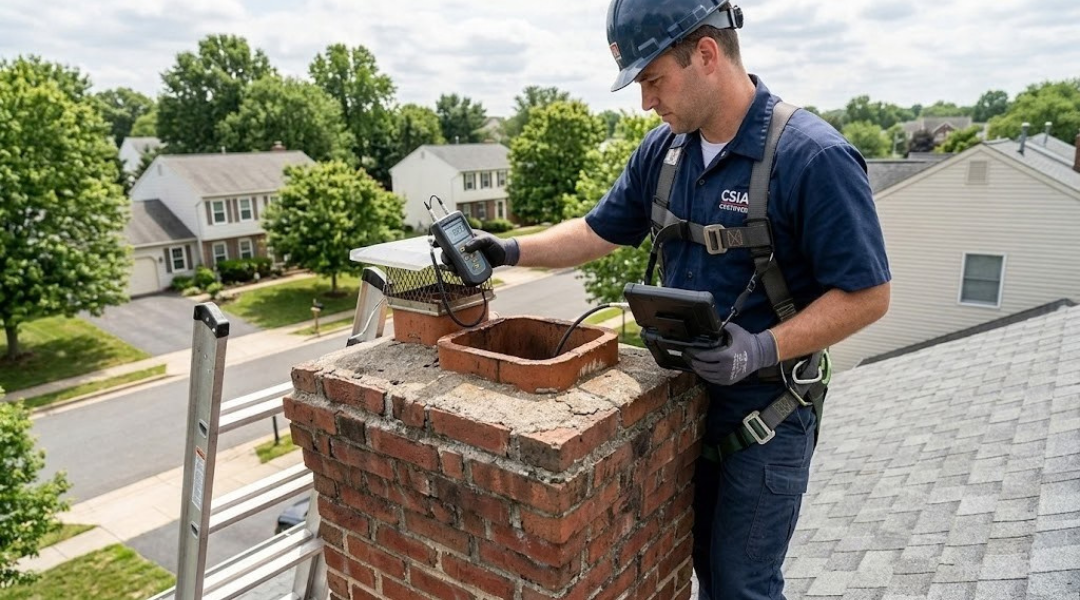
The certification requires knowledge of carbon monoxide risks and proper venting. Your technician should test draft and check for blockages. They explain why certain repairs matter for your family’s safety.
A qualified chimney service will document everything in writing. You receive a detailed report showing what they found and what needs attention. This transparency helps you make informed decisions about repairs and maintenance timing.
Limits, Assumptions, And Homeowner Tradeoffs
CSIA certification sets a baseline for competency but doesn’t guarantee equal skill levels across all certified professionals. The standards create certain cost structures and safety approaches that affect what you get when you hire a certified chimney sweep.
Certification Versus Experience Depth
CSIA certification proves a technician passed two exams and completed required training. It doesn’t measure years of hands-on work or problem-solving ability.
A newly certified sweep has the same credential as someone who’s been certified for 20 years. The knowledge baseline is identical, but practical expertise differs significantly. Both technicians meet the 70% passing threshold on the same tests.
Your chimney might have unique problems that require experience beyond textbook knowledge. Old masonry issues, unusual flue configurations, or rare damage patterns need someone who’s seen similar situations before. Certification confirms they know standard procedures. It doesn’t tell you how many challenging jobs they’ve completed.
You should ask about a technician’s work history alongside their certification status. Find out how long they’ve held the credential and what types of chimneys they’ve worked on. Massachusetts homes built before 1900 need different expertise than modern prefab systems.
Cost Implications Of Standard Adherence
CSIA-certified companies typically charge more than uncertified competitors. The certification costs money to obtain and maintain, and that expense passes to customers.
Training materials, exam fees, and continuing education add up over time. Each three-year renewal requires either retaking exams or completing 48 hours of coursework. These aren’t free.
Typical cost differences you might see:
- Certified sweep inspection: $150-300
- Uncertified sweep inspection: $80-150
- Certified company repairs: Follow strict code requirements
- Uncertified company repairs: May cut corners on materials or methods
You’re paying for adherence to national standards and ethics requirements. That includes accurate problem identification instead of overselling services. It means proper materials and installation methods that match current codes.
Some homeowners choose cheaper options and accept higher risk. That’s a personal decision about immediate savings versus long-term safety.
Long-Term Safety Margins Versus Minimal Compliance
CSIA standards exceed basic functionality requirements. Certified sweeps learn to build in safety margins that go beyond “good enough.”
A chimney can pass a basic visual check but still have hidden problems. Cracked flue tiles might not show from the top. Mortar deterioration happens inside walls where you can’t see it. Carbon monoxide leaks don’t announce themselves.
Certified technicians look for these non-obvious issues because their training covers failure modes and early warning signs. They understand how problems develop over time. Minimal compliance means fixing only what’s broken right now. Proper maintenance addresses what might fail next year.
The difference shows up years later. A correctly installed liner lasts 15-20 years. A shortcut installation might fail in 5-7 years. You won’t know which you got until problems appear.
Some homeowners want the cheapest service that keeps their chimney working this season. Others prefer investing in thorough inspections that prevent future emergencies. CSIA certification aligns with the second approach but costs more upfront.