Wood-burning fireplaces offer warmth and comfort but also come with fire risks that demand attention. Proper maintenance, including regular chimney cleaning and burning the right type of wood, is essential to prevent chimney fires and keep homes safe. Ignoring these safety measures can lead to dangerous creosote buildup and increased fire hazards.
A Chimney Expert LLC in Oak Grove, Virginia, emphasizes that understanding how to safely operate and care for a wood-burning fireplace is key to minimizing risks. Ensuring good airflow, closing dampers when not in use, and scheduling annual professional inspections help protect both families and property.
With decades of experience and expertise, A Chimney Expert LLC provides reliable services to maintain fireplace safety and efficiency. This article outlines practical fire prevention tips every wood-burning fireplace owner should follow to enjoy their hearth safely year-round.
Fire Hazards in Wood-Burning Fireplaces
Wood-burning fireplaces pose specific risks that require careful attention. These hazards often arise from factors like user habits, material buildup, and installation issues. Understanding these dangers helps prevent accidents and maintain a safe home environment.
Common Causes of Fireplace-Related Fires
Many fireplace fires result from unattended embers or sparks that escape the firebox. Using the wrong type of firewood, such as wet or resinous wood, increases smoke and sparks, raising fire risks.
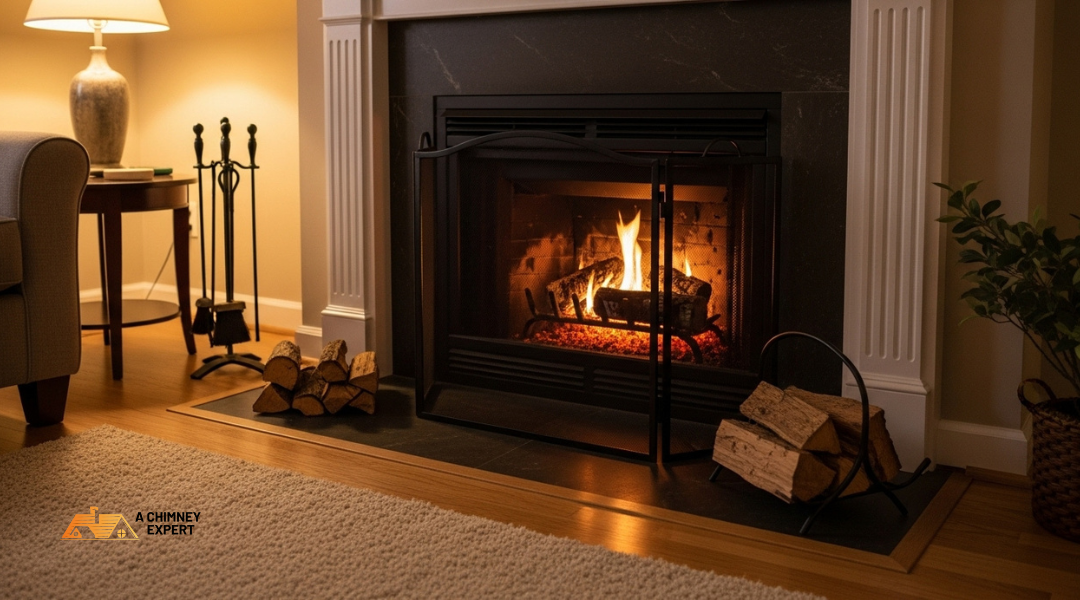
Leaving combustible materials, like rugs or furniture, too close to the fireplace is another frequent cause. Neglecting to use a proper screen can allow embers to ignite nearby objects, leading to accidental fires.
Faulty operation, such as overloading the firebox with excessive wood, also increases the chance of uncontrolled flames. Regularly monitoring the fire and keeping the area clear reduces these risks significantly.
The Role of Creosote Buildup and Blockages
Creosote is a flammable substance that accumulates inside chimneys when wood burns. This build-up narrows the chimney and can ignite, causing dangerous chimney fires.
Blockages caused by creosote, debris, or animal nests restrict airflow, increasing smoke and carbon monoxide levels indoors. These blockages can also prevent heat and gases from venting safely.
Annual professional chimney cleaning removes creosote and clears blockages, reducing the risk of chimney fires. Regular inspections identify early signs of buildup before hazards develop.
Dangers of Improper Installation or Maintenance
Improperly installed fireplaces or chimneys may have cracks or gaps in the flue lining, which allow heat and flames to reach combustible structures. This can cause hidden fires inside walls or ceilings.
Inadequate maintenance, such as ignoring cracked bricks or loose mortar, weakens the fireplace structure and creates fire entry points. Lack of maintenance also leads to malfunctioning dampers that affect smoke control.
Hiring certified professionals for installation and maintenance ensures compliance with safety standards. Proper sealing, alignment, and part replacements prevent structural hazards and reduce fire risks.
Proper Fireplace Usage Practices
Using a wood-burning fireplace safely requires attention to the type of wood burned, materials avoided, and maintaining adequate space around the fireplace. Following these practices reduces fire risks and promotes efficient heating.
Always Use Seasoned Hardwood
Seasoned hardwood is wood that has been dried for at least six months, reducing moisture content to below 20%. Using seasoned hardwood ensures the fire burns hotter and cleaner, minimizing creosote buildup in the chimney.
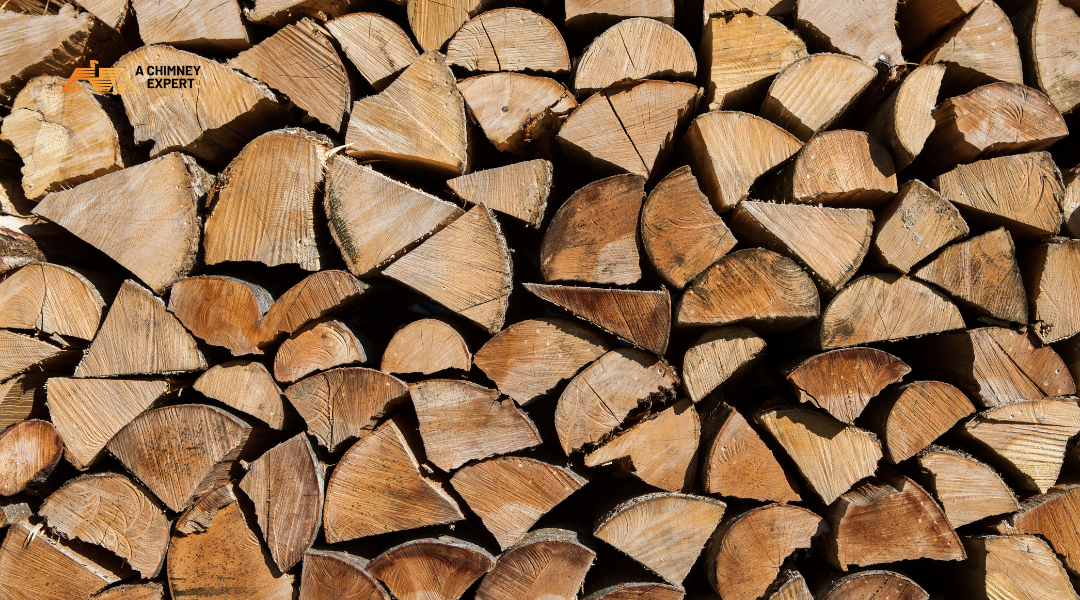
Wet or green wood produces excessive smoke and soot, which increases the chance of chimney fires. Hardwood like oak, maple, or hickory is preferred because it burns longer and provides consistent heat.
For best results, store firewood under cover and off the ground to keep it dry. Using only properly seasoned hardwood reduces maintenance needs and improves fireplace safety.
Never Burn Household Trash or Treated Wood
Burning household trash, plastics, or treated wood releases toxic chemicals that are hazardous to health and damaging to the chimney system. These materials can produce hazardous fumes and cause dangerous creosote accumulation.
Treated wood often contains chemicals like paint, glue, or preservatives that release toxic smoke when burned. This smoke can also scar the chimney lining, leading to costly repairs or structural issues.
Strictly use only appropriate firewood. Avoid burning paper, cardboard, and especially any treated or painted wood to keep the air clean and the fireplace functioning safely.
Keep a Safe Clearance Around the Fireplace
Maintain at least three feet of clearance around the fireplace to prevent accidental fires. Flammable items such as furniture, curtains, rugs, and decorations should be kept well away from the hearth.
Secure fireplace tools, screens, and doors to contain sparks and embers. Regularly inspect the surrounding area for combustible materials that may have accumulated.
Fire safety requires vigilance. Clear space reduces the risk of sparks igniting nearby objects or materials, protecting both the home and its occupants.
Fireplace and Chimney Maintenance Essentials
Proper care of a wood-burning fireplace and chimney directly impacts safety and efficiency. Routine cleaning and inspections reduce fire risks and help detect early damage before it becomes costly or dangerous.
Schedule Regular Chimney Sweeping (At Least Annually)
A certified chimney sweep should clean the chimney and flue once a year. This process removes creosote buildup, a highly flammable byproduct of burning wood.
Neglecting this can lead to chimney fires or blockages that reduce airflow. Sweeping also clears debris such as bird nests or leaves that could obstruct proper ventilation.
During sweeping, professionals check draft performance and may recommend repairs or upgrades. Scheduling this service annually ensures the fireplace operates safely throughout the burning season.
Importance of Professional Chimney Inspections
Annual inspections by certified professionals identify hidden damage or safety hazards in the chimney structure. These include cracks in the chimney liner, damaged mortar, or signs of water infiltration.
Inspectors evaluate the integrity of the flue, chimney cap, and damper to prevent smoke and toxic gases from entering the home. They also verify compliance with local codes and recommend maintenance tasks.
Professional inspections provide peace of mind and help maintain the fireplace in good working order longer. Delaying inspections increases the risk of hazardous conditions going unnoticed.
How to Spot Early Warning Signs of Damage
Homeowners should watch for physical signs indicating chimney problems. These include:
- Cracks or gaps in the masonry
- Soot or creosote buildup beyond normal levels
- Rust on metal parts like the damper
- Unusual smoke patterns or odors inside the house
- Water stains or efflorescence on chimney walls
These signs suggest structural or ventilation issues that require professional evaluation. Early detection prevents costly repairs and reduces the likelihood of chimney fires or carbon monoxide infiltration.
Fireplace Tools, Accessories, and Safety Gear
Proper tools and safety equipment are essential for maintaining a secure environment around a wood-burning fireplace. Using the right accessories not only protects the home but also ensures efficient operation and quick response in emergencies.
Use of Fireplace Screens or Glass Doors
Fireplace screens or glass doors create a physical barrier that prevents sparks and embers from escaping the firebox. This reduces the risk of accidental burns and protects nearby objects such as rugs and furniture.
Screens made of sturdy metal mesh allow heat to dissipate while keeping flames contained. Glass doors offer added protection by sealing the fireplace, improving heat efficiency and reducing drafts. Regular cleaning and inspection help maintain their functionality and visibility.
Installing a screen or door is especially important in homes with children or pets to prevent accidental contact with active fires.
Keep a Fire Extinguisher Nearby
Having a fire extinguisher within easy reach is critical for quickly addressing unexpected flames or flare-ups. A Class A extinguisher, designed for ordinary combustibles like wood, paper, and cloth, is recommended for fireplaces.
The extinguisher should be placed near the fireplace but out of reach of children. Family members must know how to operate it and check its pressure regularly.
Periodic inspections ensure the extinguisher is charged and ready. Replacing or servicing it as needed maintains preparedness for emergencies.
Install Carbon Monoxide and Smoke Detectors
Carbon monoxide and smoke detectors are vital safety devices in any home with a wood-burning fireplace. They provide early warnings of dangerous gases and potential fires.
Detectors should be installed close to the fireplace and throughout living areas. Regular testing and battery replacement are necessary to ensure they function correctly.
Combination alarms that detect smoke and carbon monoxide offer enhanced protection. These devices must comply with current safety standards and be maintained according to the manufacturer’s instructions.
Preparing for and Managing a Fire Emergency
Being ready for a fire emergency in a home with a wood-burning fireplace involves clear planning and knowing specific actions to take. Understanding escape routes, responding correctly to chimney fires, and maintaining communication with emergency services are key to reducing risk and ensuring safety.
Create and Practice a Home Fire Escape Plan
A detailed fire escape plan must include at least two ways out of every room. It should identify a safe meeting spot outside, away from the house.
Residents should walk through the plan with all household members, practicing it at least twice a year. They must emphasize staying low to avoid smoke and checking doors for heat before opening them.
Smoke alarms should be checked monthly to ensure they work. Clear pathways and keep exits free from obstructions to allow quick evacuation.
What to Do if a Chimney Fire Starts
If a chimney fire is suspected, immediately close the damper and air vents to reduce oxygen feeding the fire. This slows the fire’s progress inside the chimney.
Do not attempt to put out the fire yourself with water or extinguishers. Instead, evacuate everyone safely and call professional firefighters.
Afterward, have A Chimney Expert LLC inspect the chimney to assess damage. Creosote buildup often causes chimney fires, and a professional cleaning is usually necessary.
Emergency Contact Protocols
Keep emergency numbers, including the local fire department, saved on all household phones. Post a list near landline phones or exit points if available.
In case of any fire, call 911 immediately. Provide clear information: address, type of fire, and if anyone is inside.
Notify A Chimney Expert LLC promptly after a fire event to schedule assessments and repairs. Early professional help minimizes further damage and secures the home.
Why Trust A Chimney Expert LLC for Fire Prevention Support
Choosing the right chimney service is essential for maintaining safety and efficiency. A Chimney Expert LLC offers certified professionals, thorough service options, and a deep commitment to the Oak Grove community.
CSIA-Certified Chimney Professionals
A Chimney Expert LLC employs technicians certified by the Chimney Safety Institute of America (CSIA). This certification ensures they meet national standards for chimney inspection, sweeping, and maintenance.
Certification means technicians understand how to identify fire hazards such as creosote buildup and structural damage. These experts use proven methods to prevent chimney fires, protecting homes effectively.
Clients can expect thorough inspections with reports detailing existing or potential issues. The certification provides assurance that the work is reliable and performed by trained specialists.
Comprehensive Services from Cleaning to Relining
The company offers a full range of chimney care services. Routine cleaning removes creosote deposits that cause the majority of chimney fires.
They also provide repairs such as chimney relining, which corrects cracks or deterioration inside the flue. Relining improves airflow and fire resistance, reducing risks significantly.
Other services include masonry repairs, cap installation, and smoke chamber cleaning. This comprehensive approach addresses all factors that impact fireplace safety and performance.
Serving Oak Grove, VA with Integrity and Expertise
A Chimney Expert LLC has built a reputation for dependable service in Oak Grove, Virginia. Their staff takes local climate and building conditions into account when recommending maintenance.
They prioritize clear communication, providing detailed estimates and explaining safety concerns. Customers receive honest advice based on thorough inspections.
This transparent approach combined with expert knowledge makes them a trusted partner for fire prevention in the community. They focus on long-term safety and customer satisfaction.